Focus #1 | The HEPATANT project

HEPATANT is a project run by the Wagralim Competitiveness Cluster and coordinated by ORTIS Laboratories, a company that has been a pioneer in the field of phytosanitary products (plant-based dietary supplements) for 60 years. It aims to find a natural treatment for fatty liver disease.  Several partners are involved in the project, including Professor Thierry Arnould (UNamur, URBC-Narilis).

Image
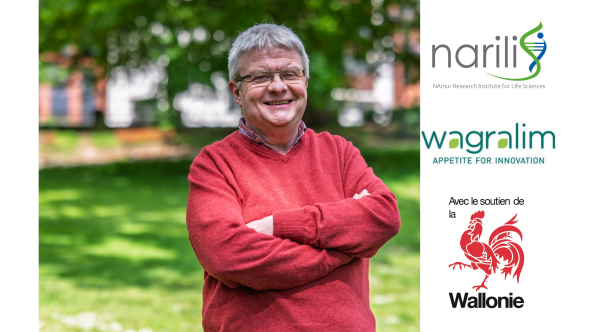
Photo portrait de Thierry Arnould

Our metabolism naturally leads to the accumulation or synthesis of fat. Certain cells are designed for this purpose: these are called adipocytes. The main goal is to be able to mobilize fat and release fatty acids "when needed."  The problem is that if there is an excess of nutrients, certain cells in the body, which are not designed to do so, can also accumulate fat in tissues such as the liver, heart, or muscles, which can cause health problems. This is known as "lipotoxicity." 

Prof. Thierry Arnould UNamur, URBC - Narilis

Metabolic dysfunction-associated steatotic liver disease (MASLD) is an accumulation of fat in the liver linked to metabolic disorders associated with metabolic syndrome, obesity, diabetes, or excessive alcohol consumption.  Initially, it is often asymptomatic but can progress to inflammation, fibrosis, cirrhosis, or even liver cancer. However, it is reversible in its early stages (steatosis).  Treatment is based on weight loss, a healthy diet (reduced sugar/fat intake), and physical exercise, as few specific drugs have been approved by the FDA (Food and Drug Administration) at this time.  Dietary supplements—based on plants known to be beneficial—are often used to treat this type of condition, but there is little or no scientific and mechanistic evidence on the actual effects of these products.

If the effectiveness of a dietary supplement or combination of supplements could be demonstrated, it would be possible to intervene at the primary stage of the condition and undoubtedly prevent this liver disorder, thereby halting or at least slowing its progression to advanced or even irreversible stages.  This is the aim of this project, in which Professor Thierry Arnould was chosen for his expertise in lipid metabolism. Professor Arnould and postdoctoral researcher Célia Thomas are testing plant extracts (including hops) in vitro on fat-laden cells to investigate the effects that increase or decrease lipid accumulation. 

The originality and feasibility of the project lie in the alliance of scientific experts internationally recognized for their expertise in biomedical and pharmaceutical sciences, and in technological and agronomic sciences, with renowned industrialists in their field of expertise related to the project's needs. 

In addition to its main objective of creating an effective formulation against hepatic steatosis by combining the best plants or plant substances, this project also aims to generate economic growth, create and sustain jobs in Wallonia, and contribute to the international reputation of the Walloon partner universities: UCLouvain and UNamur.

The partners of the HEPATANT project

  • Prof. Thierry Arnould – UNamur, URBC, Narilis | Expertise: The URBC-NARILIS laboratory has extensive expertise and experience in cell differentiation, metabolism, and lipid metabolism in obesity and adipose cells. It also has excellent expertise in the field of hepatocytes and hepatogenic differentiation from precursors and stem cells (collaboration with Professor P. Renard, UNamur, URBC-NARILIS).
  • Prof. Isabelle Leclercq - UCLouvain (IREC/GAEN) | Expertise: Pathogenesis of liver diseases in in vivo models.
  • Remi Desmet – UCLouvain (Louvain University Farms - FERM) | Expertise: Agronomic research - As a UCLouvain technology platform, FERM works with farmers and partners to support the transition to more sustainable agricultural models.
  • Alexandre Dumont de Chassart - Yakima Chief Hops | Expertise: Production of hops and hop-derived products.
  • Caroline Devillers – Bel go Bio | Expertise: Agricultural cooperative

Competitiveness Clusters in the Walloon Region

Since their creation in 2006, competitiveness clusters have brought together companies, accredited research centers, and universities around ambitious collaborative projects. Supported and funded by the Walloon Region to stimulate innovation and economic growth, competitiveness cluster projects are organized around six strategic sectors: biotechnology (BioWin), aerospace (SkyWin Wallonia), logistics (Logistics in Wallonia), green chemistry (GreenWin), mechanical engineering (Mecatech), and food system transition (Wagralim). aerospace (SkyWin Wallonia), logistics (Logistics in Wallonia), green chemistry (GreenWin), mechanical engineering (Mecatech), and food system transition (Wagralim). 

The projects aim to develop innovative products, services, or processes, creating jobs and strengthening international competitiveness. UNamur is heavily involved in these projects.

Wagralim, the Walloon agri-food cluster, has more than 300 members working to stimulate innovation and collaboration within the food ecosystem and support stakeholders in their responsible development and sustainable transition.

Logo Wagralim, le Pôle agroalimentaire wallon

From fundamental to applied research, UNamur demonstrates every day that research is a driver of transformation. Thanks to the commitment of its researchers, the support of its partners from all walks of life, funders, industrial partners, and a solid ecosystem of valorization, UNamur actively participates in shaping a society that is open to the world, more innovative, more responsible, and more sustainable.

To go further

This article complements our publication "Research and innovation: major assets for the industrial sector" taken from the Issues section of Omalius magazine #39 (December 2025).