In the Western tradition, philosophy represents a radical effort to understand reality. Philosophy casts an astonished, questioning gaze on the world around it and on mankind. The philosopher rejects the easy "obvious" and asks why things are the way they are. Rather than a discipline juxtaposed with others, philosophy as a critical approach thus constitutes an attitude and a spirit that apply to all registers, particularly intellectual, of human activity.

"What then is philosophy today (...) if it is not the critical work of thought on itself? And if it does not consist, instead of legitimizing what we already know, in undertaking to know how and to what extent it would be possible to think otherwise?" (Michel Foucault)
Spotlight

News

University and democracy: a living, sometimes threatened, link

What the experts have to say
Democracy

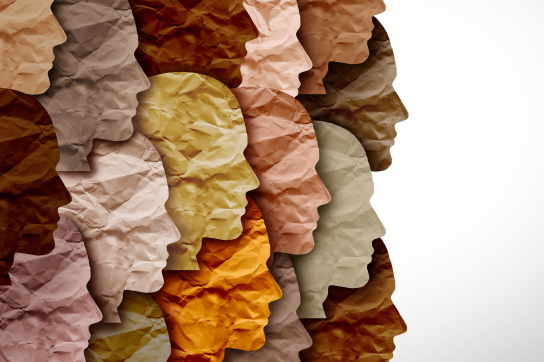
Trust of traditional political institutions and elected representatives, rise of authoritarian logics, definition of public services... Democracy today seems to be going through a turbulent zone. What role does the university play in this context? To shed light on this question, we interviewed four researchers from different disciplines: educationalist Sephora Boucenna, philosopher Louis Carré, political scientist Vincent Jacquet and legal scholar Aline Nardi. Their contrasting views sketch out the contours of an issue that is more topical than ever: thinking about and defending the link between university and democracy.
démocratie-visages

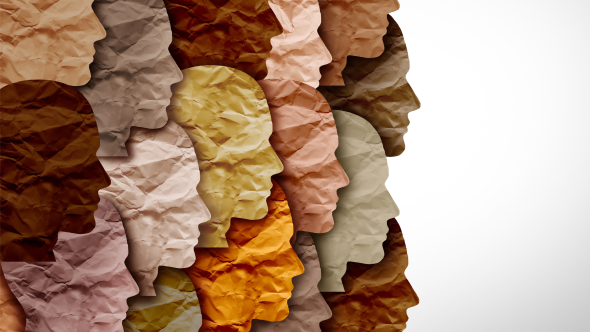
Democracy is by no means a fixed concept. It is the subject of debate, especially today. Louis Carré, Director of the Department of Philosophy and member of the Espace philosophique de Namur (Institut ESPHIN), proposes a three-dimensional definition: a political regime, a state of law and a way of forming society.

.

The concept of democracy: between people power and centralization

"Etymologically, democracy is a political regime that consists in giving power to the people," he reminds us. "Our Western democracies today are based on the idea that the people are sovereign, without governing directly. From this arises a tension between ideal democracy and real democracy."Vincent Jacquet, professor in the Department of Social, Political and Communication Sciences and president of the Transitions Institute supports the point: "Democracy is an ideal of citizen self-government, but it is in tension with more centralizing, authoritarian logics. [...] Our political systems are crisscrossed by these different tensions, with both authoritarian logics increasingly present, including in our own country, and logics of participation that are sometimes accompanied by a great deal of hope and disappointment too."

The second pillar according to Louis Carré: the rule of law. Democracy guarantees the fundamental rights of all citizens through the constitution. But here again, beware of paradoxes: "One could indeed imagine laws passed by a majority of representatives or by a referendum, but which contravene fundamental rights" the philosopher stresses. Democracy cannot therefore be summed up by the majority principle alone.

Finally, democracy is also a way of forming society. It is based on real pluralism: diversity of opinions, beliefs and values. "This presupposes the existence of a relatively autonomous public space in the face of the power in place, which at times challenges the decisions taken by the governments that have been elected,"insists Louis Carré.

As such, citizens' distrust of politics is not necessarily a symptom of democratic crisis. It may even be a sign of its vitality, as Vincent Jacquet explains:"The fact that citizens are critical of their government is not necessarily negative because, in a democracy, citizens must be able to control the actions of those in power."

Photo de Vincent Jacquet
Vincent Jacquet

Training the governors... and the governed

In this context, what is the university's responsibility? Louis Carré begins by reminding us of a simple fact: a large proportion of our elected representatives have passed through university benches. But its teaching mission doesn't stop there. "It's about training enlightened citizens, not just rulers. Universities must offer quality higher education, open to as many people as possible", he asserts.

"Democracy does indeed presuppose citizens capable of debating, reflecting, problematizing issues", adds Sephora Boucenna, Dean of the Faculty of Education and Training Sciences and member of UNamur's Institut de Recherches en Didactiques et Éducation (IRDENA). It's all about training reflective minds, capable of questioning their times.

Training reflective teachers for critical citizens

Universities also train those who, tomorrow, will educate future generations: teachers. And here again, democracy is at stake.

"Our mission is to train reflective teachers who, in turn, will teach their students to think critically"insists Sephora Boucenna. This requires in-depth work on analyzing practices, collective construction and learning to debate, from initial teacher training through to in-service training.

Sephora BOUCENNA
Sephora Boucenna

Producing and disseminating knowledge... in complete independence

In addition to teaching, universities also have a research and social service mission. It produces knowledge that can enlighten public policy, but also question it. This critical function presupposes real independence from politics. "To analyze democratic mechanisms with lucidity, including those that governments put in place, the university must retain its freedom of research and speech," insists Vincent Jacquet.

Louis Carré goes further: "Like the press, the university is a form of counter-power in the public space". He also points out that "there is a confusion between freedom of opinion and academic freedom. Academic knowledge goes through a series of verification, experimentation and discussion procedures within the scientific community. This gives it a robustness that is not that of an opinion, a value, a belief."

Louis Carré
Louis Carré

This critical function of the university presupposes strong independence. In Belgium, however, university funding is largely a matter for the political authorities. "Celane must not mean being placed under tutelage", warns Louis Carré. "Conducting critical research that doesn't satisfy short-term sponsors requires independence, including in terms of resources. We need a large number of researchers who can analyze different types of dynamics. The more we cut research funding, as is the case today, the fewer researchers we'll have and therefore the less capacity for independent analysis and diversity of perspectives, insists Vincent Jacquet.

The "Université en colère" movement, recently launched within the universities of the Wallonia-Brussels Federation, intends to denounce the effects of definancement. Its representatives are calling for "guarantee the conditions for the development of an open, independent, quality university accessible to the greatest number. Faced with the social, economic and political challenges of our time, and because other choices for society, and therefore budgets, are possible, it is more essential than ever to strengthen the institutions and players at the heart of knowledge production."

Between vigilance and commitment: a link to be reinvented

Democracy is therefore not limited to elections or institutions. It is based on collective vigilance, carried by citizens, knowledge... and the places where this knowledge is built. In this respect, universities are an essential link in the chain of democratic vitality. Provided it remains independent, accessible and open to society.

"Democracy is not just a matter of institutions. It's about citizens who bring it to life and organize themselves to assert their perspectives at different times", insists Vincent Jacquet. A clear invitation not to remain a spectator, but to participate, with lucidity and exigency, in the construction of a common democratic future.

On the same subject

  • Artificial intelligence, a danger for democracy?

An academic year focused on democracy

Find the speech given by Rectrice Annick Castiaux at the 2025-2026 Academic Back-to-School Ceremony.

Discours de la Rectrice à la Cérémonie de rentrée académique 2025-2026

Cet article est tiré de la rubrique "Le jour où" du magazine Omalius #38 (Septembre 2025).

cover-omalius-septembre-2025

Jérôme Bouvy, Hospital philosopher

Alumni
Philosophy
Portrait

After studying philosophy at UNamur and a few years as a teacher, Jérôme Bouvy became the first hospital philosopher at the Grand Hôpital de Charleroi. His missions: to bring philosophy as a living practice to the heart of his institution's day-to-day operations, and to support workers in their quest for meaning in their work.

Jérôme Bouvy

This article is taken from the "Alumni" section of the June 2024 issue of Omalius magazine.

Omalius: You're a hospital philosopher. Can you tell us more about this profession?

Jérôme Bouvy: Three years ago, the Grand Hôpital de Charleroi wanted to work on the loss of meaning in hospitals. Many questions have always agitated this environment, and this has been accentuated more recently following the pandemic, which in particular revealed a great deal of ethical suffering among caregivers. The role of a hospital philosopher, in the face of these many questions, is to open up spaces for reflection within the institution. My work therefore aims to deploy reflective practices, particularly in an environment where the search for meaning can be overwhelming, as is often the case in the healthcare field. My aim is to encourage hospital staff to take the time to think critically and share their concerns, in order to foster constructive dialogue. One of the special features of my role is that I don't speak directly to patients. I'm hired to work with staff members, whether they're nurses, IT specialists, accountants... that's over 200 professions.

O.How does this play out on a day-to-day basis?

J.B.: I run philosophy workshops or ethical times with hospital workers to liberate thought in the hospital and question what puts them in difficulty. These are places of comfort, where we re-weave the collective, but they are also sometimes places of discomfort. People don't just come to share their opinions, they come to question them. Workers also come to talk about their own vulnerability, as caregivers or citizens. To animate these spaces, I use tools from the new philosophical practices movement. I launch discussions with a philosophical and democratic purpose (developed by Michel Tozzi), and I make extensive use of the philosophical research community (developed by Matthew Lipman). In concrete terms, this can take the form of philosophy workshops, reading and writing groups, seminars or ethical marauding... In hospitals, the best entry point for caregivers is clinical ethics. Starting from a care situation, we can draw out the thread of questioning. We then arrive at philosophical questions or, more broadly, the humanities in healthcare. I defend the idea of a modest philosophy, with the aim of instilling a taste for philosophical practice. Philosophy isn't there to work miracles; it's there to question work. To do philosophy is already to show lucidity, to get away from simplisms that do us good.

O.What issues do you discuss at these meetings?

J.B.: There are many: hospital violence, autonomy, ethical suffering, compassion fatigue, vulnerability, or lack of dialogue. Relationships between doctors and nurses can also be difficult. The question is how to organize healthcare. There is sometimes talk of a managerial turnaround in this sector at the turn of the 80s, which put the organization of work in difficulty. This neo-management trend, which originated in the private sector, is also nibbling away at the hospital sector. This calls for a kind of vigilance. Being a philosopher in the hospital is not just about accompanying change. There's such an imperative today for adaptation and agility that we also need to be able to question the need for this change, and perhaps even sometimes resist it.

O.What skills does a hospital philosopher need?

J.B.: The main quality is undoubtedly humility. You don't come to the hospital saying "You're in pain, I'm here to help you", but rather with a "You're in pain, help me understand" approach. This humility is essential, because it's vital to recognize that the role of the hospital philosopher is not to provide preconceived answers, but rather to ask the right questions and encourage reflexivity. This also requires a strong capacity for listening and dialogue. Moreover, my role as president of the Cercle Carolo at UNamur during my studies and my festive side undoubtedly helped me to be at ease socially. For me, a philosopher has to know how to walk on two feet. Then there's the practical foot: being out in the field, working in teams. This implies a great deal of didactic attention (how do you arouse the interest of workers who don't feel concerned by philosophy?) The second foot is that of theory, via readings or conferences. There's always an imbalance between these two dimensions, because going out into the field means raising new questions, which call for a new theoretical exercise.

O.How do you see the future of philosophy in the hospital environment?

J.B.: There's a lot of curiosity about this new position. I'd love to see a network of hospital philosophers set up in the years to come - that would be great! Our ambition is to develop a culture of dialogue within the hospital, through deliberative forums that need to be institutionalized. Beyond the involvement of a philosopher, the aim is to make room for the humanities in healthcare. This can be achieved through the involvement of a sociologist, an anthropologist, a philosopher...

O.What advice would you give to young people who want to take up philosophy?

J.B.: I'd like to stress the importance of working seriously, without taking oneself too seriously. That's what guides me to this day. A philosopher who takes himself too seriously risks missing out on an essential form of lightness. You have to be able to find your balance and enjoy studying beyond the classroom, because partying is part of it too.

O.What do you remember about your time at the University of Namur?

J.B.: The word that comes to mind is "family". I haven't always been a very present student, but I've never felt abandoned by my teachers. They offer support that you can't find elsewhere. I might have dropped out at 18 if I hadn't benefited from this special support.

Course

This article is taken from the "Alumni" section of Omalius magazine #33 (June 2024).

Couverture Omalius#33

Portrait - Thibaut De Meyer: Multiplying perspectives across species

Philosophy
Portrait

Discover the singular journey of Thibaut De Meyer, a passionate anthropologist and philosopher who fuses these two disciplines into a concrete and innovative approach. From his exploration of human interaction in the laboratory to his analysis of perspective in animals, his work reveals a fascination for the nuances of consciousness and perception. As an academic and author, he is committed to enlightening students on contemporary philosophical issues, while projecting his gaze to new horizons, such as the history and epistemology of the mirror test.

Thibault De Meyer

Thibaut De Meyer obtained his Master's degree in Anthropology at ULB, while nurturing a passion for philosophy. He therefore decided to also pursue a Master's degree in Philosophy, constantly seeking to establish balances and complementarities between these two fields. His approach has always been oriented towards concrete situations, where concepts are applied, in order to stay as close as possible to the realities studied by ethnologists and anthropologists. He has systematically explored the conceptual dimension in human actions and behaviors.

As part of his anthropology dissertation (People, Genes and Geneticists), he focused on the ethnography of a laboratory, examining how humans interact with blood bags and turn them into genetic maps of patients. In philosophy (in a dissertation entitled The Ecology of Monads), his interest focused on the concept of perspective in Leibniz, a modern thinker who explored the relationship between immaterial perspectives (which he called "monads") and material entities (bodies). Subsequently, Thibault De Meyer turned his attention to the question of consciousness in animals, notably by studying their ability to recognize themselves and attribute cognitive states to their fellow creatures.

Recently, Thibaut De Meyer has published a book entitled Qui a vu le zèbre? L'invention de la perspective animale (publisher: Les Liens qui Libèrent), in which he tackles the question of perspective through the case of zebra stripes, which are perceived differently by humans, lions, hyenas, flies... By taking into account this multiplicity of perspectives, biologists have come to question certain hypotheses seeking to explain the function of zebra stripes. Through a philosophical analysis of these scientific studies, Thibault De Meyer defends a form of relational perspectivism, which he distinguishes and compares to linear perspectivism, among others. This book stems from his doctoral thesis (Le bestiaire de Brunelleschi. Perspectivism and its reinvention in ethology) completed under the supervision of Vinciane Despret and defended in September 2022 at the University of Liège.

Since his academic appointment last September at UNamur, Thibaut De Meyer teaches philosophy of science and technology, as well as logic and argumentation. In the General Introduction to Philosophy course, together with his colleague Nicolas Monseu, he tries to make the subject attractive to students through pedagogical innovations, creating mini-shows, bringing in Lego blocks, etc.

As for his future projects, he plans to look into the history of the mirror test, the challenges it poses and the problems it solves, particularly as a non-verbal psychological test. As he points out, "The mirror is full of riddles."

Video TEDxTours | Acromatopsia: see colors differently | Thibault De Meyer

Thibault Meyer lors du TEDxTours

Laura Rizzerio (Philosopher): "Why we urgently need to propose better resource management"

What the experts have to say
Philosophy
Science, philosophy and society

Laura Rizzerio is Professor of Philosophy at UNamur. Part of her research focuses on the notion of the common good. This theme was at the heart of the reflections on the occasion of the annual Chair of the Notre-Dame de la Paix University Centre, continuing an approach already begun the previous year during a research seminar. Laura Rizzerio takes a closer look at this concept and reviews the exchanges that took place.

Retour sur la thématique du bien commun avec la philosophe Laura Rizzerio

« Communs et bien(s) commun(s) » : pourquoi ce thème ? Pour dresser un constat et répondre à une urgence. 

Le constat

Il est évident que nos sociétés occidentales sont confrontées aujourd’hui à de multiples crises : économique, sociale, religieuse, écologique, politique, sanitaire. Ces crises font souffrir de populations entières et menacent d’extinction de nombreuses espèces, si non la planète elle-même. Mais elles ont au moins le mérite d’avoir permis le progressif effondrement du paradigme anthropologique datant de l’époque moderne. Celui-ci est fondé sur l’individu conçu comme self made man invulnérable et autonome, pour qui l’épanouissement personnel et la réalisation de soi, associés à la satisfaction de ses besoins individuels, constituent la finalité ultime de son existence.  

Ce paradigme a rendu possible le développement d’une organisation économique, sociale et politique structurée autour de la production, l’exploitation des ressources et le principe de la propriété privée, y compris pour les ressources que nous pourrions définir comme des « biens communs » (telles l’eau ou les matières premières – le gaz, le charbon, le pétrole, les minéraux, les forêts - ainsi que les inventions technologiques ou le patrimoine culturel développé au fil du temps). Cette organisation économique a favorisé la construction d’un État souverain dont la légitimité a longtemps reposé sur un « contrat » établi avec les citoyens qui garantit sécurité et protection à leurs intérêts particuliers en échange de l’aliénation d’une partie de leurs biens et de certaines libertés. Mais depuis l’avènement de la société industrielle, puisque le marché a progressivement remplacé l’État comme autorité légitime capable d’assurer la paix sociale, on se retrouve aujourd’hui faceà une organisation sociétale ultra-libérale qui favorise la réduction de toute réalité à un objet d’échange, y compris les ressources communes et l’homme lui-même. 

 C’est ce paradigme anthropologique et économique que les crises actuelles font chanceler.

On redécouvre progressivement que l’individu conçu comme self made man invulnérable et autonome n’existe pas, et que tous les vivants sont liés entre eux et à leur environnement, étant tous affectés par une commune vulnérabilité. Cela a fait resurgir un certain intérêt pour le(s) bien(s) commun(s).

Laura Rizzerio Professeure de Philosophie

L’urgence

Il devient aujourd’hui urgent d’imaginer et de mettre en œuvre un nouveau modèle de société capable de proposer une meilleure gestion des ressources et d’apporter ainsi de réponses plus adéquates aux crises auxquelles on est confronté. C’est ici que la référence au « bien commun » et aux « biens communs », qui a refait surface ces dernières décennies dans les recherches et dans les pratiques, devient intéressante. En 2009, le Prix Nobel d’économie a été attribué à Elinor Ostrom pour ses recherches à propos de la « théorie des communs »1. Il s’agit d’une théorie qui identifie les « communs » aux ressources matérielles et immatérielles d’une communauté dont la gestion résulte de la négociation de règles entre des individus.  Ces derniersse conçoivent en relation les uns avec les autres et ont à cœur le collectif, communiquent non pas en vue de l’intérêt particulier, mais en vue de la bonne gestion de ces mêmes biens, en garantissant aussi leur durabilité.  

Cette théorie permet d’envisager un nouveau modèle de gouvernance qui place les décisions de la communauté au centre des jeux économiques en suggérant d’autres modalités d’accès aux biens communs et à la propriété (qui ne disparaît pas pour autant) que celles imposées par le marché. Ce modèle renoue aussi avec la notion de bien commun telle qu’elle a été proposée dans l’Antiquité et au Moyen Âge (par exemple chez Aristote et Thomas d’Aquin),  et qui était associée à une vision anthropologique où l’Homme est pensé comme un être « politique » qui trouve sa raison d’être dans sa capacité à s’ouvrir à autre que lui, à travers le langage et la communication par exemple. 

L’ articulation entre « théorie des communs » et « bien commun » étant encore peu étudiée, la Chaire Notre-Dame de la Paix de l’UNamur a voulu mettre le focus sur le rapport qui existe entre Communs et  bien(s) commun(s), en invitant à prendre la parole de spécialistes en différentsdomaines (économie, philosophie, théologie, sciences humaines, droit, sciences et technologies, aménagement du territoire). La Chaire a ainsi accueilli de nombreux professeurs et professeures, spécialistes de renommée internationale, tels l’économiste et théologien Gaël Giraud, l’économiste Benjamin Coriat, les juristes Fabienne Orsi, Serge Gutwirth, Séverine Dussoiler et Alain Strowel ; les philosophes Arnaud Macé et Cécile Renouard ; l’historien René Robaye, et l’ingénieur architecte urbaniste Bernard Declève. Leurs interventions ont permis de mieux comprendre ce que la prise en compte du bien commun peut produire, pratiquement aussi, au niveau de la conception du bien, du juste, de la propriété et de la gestion des ressources dans le respect de la liberté de chacun.  

Le public, nombreux, composé d’académiques, de chercheurs, d’étudiantes et d’étudiants, de personnalités émanant de la société, a apprécié la profondeur des interventions et les réflexions que les différents intervenants ont proposées, permettant également un temps d’échange après chaque conférence. La Chaire Notre-Dame de la Paix et le centre de recherche éponyme (cUNdp) inscrivent ainsi leurs réflexions dans une démarche de service à la société en vue de contribuer à la construction d’un modèle « durable » d’organisation sociétale, respectueuse des personnes et de l’environnement.  

Le cUNdp en collaboration avec d’autres chercheuses et chercheurs de l’UNamur et d’autres universités belges et étrangères projette la constitution d’un think tank pour poursuivre la réflexion et conduire à de propositions concrètes, en bénéficiant aussi de l’apport et de l’expérience des acteurs de la société qui ont déjà donné vie à des expériences de Communs. 

Le centre Universitaire Notre-Dame de la paix

University and democracy: a living, sometimes threatened, link

What the experts have to say
Democracy

Trust of traditional political institutions and elected representatives, rise of authoritarian logics, definition of public services... Democracy today seems to be going through a turbulent zone. What role does the university play in this context? To shed light on this question, we interviewed four researchers from different disciplines: educationalist Sephora Boucenna, philosopher Louis Carré, political scientist Vincent Jacquet and legal scholar Aline Nardi. Their contrasting views sketch out the contours of an issue that is more topical than ever: thinking about and defending the link between university and democracy.

démocratie-visages

Democracy is by no means a fixed concept. It is the subject of debate, especially today. Louis Carré, Director of the Department of Philosophy and member of the Espace philosophique de Namur (Institut ESPHIN), proposes a three-dimensional definition: a political regime, a state of law and a way of forming society.

.

The concept of democracy: between people power and centralization

"Etymologically, democracy is a political regime that consists in giving power to the people," he reminds us. "Our Western democracies today are based on the idea that the people are sovereign, without governing directly. From this arises a tension between ideal democracy and real democracy."Vincent Jacquet, professor in the Department of Social, Political and Communication Sciences and president of the Transitions Institute supports the point: "Democracy is an ideal of citizen self-government, but it is in tension with more centralizing, authoritarian logics. [...] Our political systems are crisscrossed by these different tensions, with both authoritarian logics increasingly present, including in our own country, and logics of participation that are sometimes accompanied by a great deal of hope and disappointment too."

The second pillar according to Louis Carré: the rule of law. Democracy guarantees the fundamental rights of all citizens through the constitution. But here again, beware of paradoxes: "One could indeed imagine laws passed by a majority of representatives or by a referendum, but which contravene fundamental rights" the philosopher stresses. Democracy cannot therefore be summed up by the majority principle alone.

Finally, democracy is also a way of forming society. It is based on real pluralism: diversity of opinions, beliefs and values. "This presupposes the existence of a relatively autonomous public space in the face of the power in place, which at times challenges the decisions taken by the governments that have been elected,"insists Louis Carré.

As such, citizens' distrust of politics is not necessarily a symptom of democratic crisis. It may even be a sign of its vitality, as Vincent Jacquet explains:"The fact that citizens are critical of their government is not necessarily negative because, in a democracy, citizens must be able to control the actions of those in power."

Photo de Vincent Jacquet
Vincent Jacquet

Training the governors... and the governed

In this context, what is the university's responsibility? Louis Carré begins by reminding us of a simple fact: a large proportion of our elected representatives have passed through university benches. But its teaching mission doesn't stop there. "It's about training enlightened citizens, not just rulers. Universities must offer quality higher education, open to as many people as possible", he asserts.

"Democracy does indeed presuppose citizens capable of debating, reflecting, problematizing issues", adds Sephora Boucenna, Dean of the Faculty of Education and Training Sciences and member of UNamur's Institut de Recherches en Didactiques et Éducation (IRDENA). It's all about training reflective minds, capable of questioning their times.

Training reflective teachers for critical citizens

Universities also train those who, tomorrow, will educate future generations: teachers. And here again, democracy is at stake.

"Our mission is to train reflective teachers who, in turn, will teach their students to think critically"insists Sephora Boucenna. This requires in-depth work on analyzing practices, collective construction and learning to debate, from initial teacher training through to in-service training.

Sephora BOUCENNA
Sephora Boucenna

Producing and disseminating knowledge... in complete independence

In addition to teaching, universities also have a research and social service mission. It produces knowledge that can enlighten public policy, but also question it. This critical function presupposes real independence from politics. "To analyze democratic mechanisms with lucidity, including those that governments put in place, the university must retain its freedom of research and speech," insists Vincent Jacquet.

Louis Carré goes further: "Like the press, the university is a form of counter-power in the public space". He also points out that "there is a confusion between freedom of opinion and academic freedom. Academic knowledge goes through a series of verification, experimentation and discussion procedures within the scientific community. This gives it a robustness that is not that of an opinion, a value, a belief."

Louis Carré
Louis Carré

This critical function of the university presupposes strong independence. In Belgium, however, university funding is largely a matter for the political authorities. "Celane must not mean being placed under tutelage", warns Louis Carré. "Conducting critical research that doesn't satisfy short-term sponsors requires independence, including in terms of resources. We need a large number of researchers who can analyze different types of dynamics. The more we cut research funding, as is the case today, the fewer researchers we'll have and therefore the less capacity for independent analysis and diversity of perspectives, insists Vincent Jacquet.

The "Université en colère" movement, recently launched within the universities of the Wallonia-Brussels Federation, intends to denounce the effects of definancement. Its representatives are calling for "guarantee the conditions for the development of an open, independent, quality university accessible to the greatest number. Faced with the social, economic and political challenges of our time, and because other choices for society, and therefore budgets, are possible, it is more essential than ever to strengthen the institutions and players at the heart of knowledge production."

Between vigilance and commitment: a link to be reinvented

Democracy is therefore not limited to elections or institutions. It is based on collective vigilance, carried by citizens, knowledge... and the places where this knowledge is built. In this respect, universities are an essential link in the chain of democratic vitality. Provided it remains independent, accessible and open to society.

"Democracy is not just a matter of institutions. It's about citizens who bring it to life and organize themselves to assert their perspectives at different times", insists Vincent Jacquet. A clear invitation not to remain a spectator, but to participate, with lucidity and exigency, in the construction of a common democratic future.

On the same subject

  • Artificial intelligence, a danger for democracy?

An academic year focused on democracy

Find the speech given by Rectrice Annick Castiaux at the 2025-2026 Academic Back-to-School Ceremony.

Discours de la Rectrice à la Cérémonie de rentrée académique 2025-2026

Cet article est tiré de la rubrique "Le jour où" du magazine Omalius #38 (Septembre 2025).
cover-omalius-septembre-2025

Jérôme Bouvy, Hospital philosopher

Alumni
Philosophy
Portrait

After studying philosophy at UNamur and a few years as a teacher, Jérôme Bouvy became the first hospital philosopher at the Grand Hôpital de Charleroi. His missions: to bring philosophy as a living practice to the heart of his institution's day-to-day operations, and to support workers in their quest for meaning in their work.
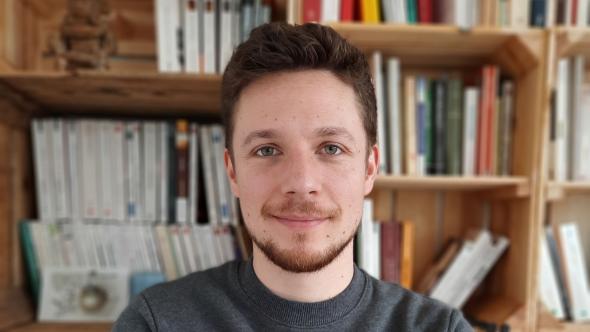
Jérôme Bouvy

This article is taken from the "Alumni" section of the June 2024 issue of Omalius magazine.

Omalius: You're a hospital philosopher. Can you tell us more about this profession?

Jérôme Bouvy: Three years ago, the Grand Hôpital de Charleroi wanted to work on the loss of meaning in hospitals. Many questions have always agitated this environment, and this has been accentuated more recently following the pandemic, which in particular revealed a great deal of ethical suffering among caregivers. The role of a hospital philosopher, in the face of these many questions, is to open up spaces for reflection within the institution. My work therefore aims to deploy reflective practices, particularly in an environment where the search for meaning can be overwhelming, as is often the case in the healthcare field. My aim is to encourage hospital staff to take the time to think critically and share their concerns, in order to foster constructive dialogue. One of the special features of my role is that I don't speak directly to patients. I'm hired to work with staff members, whether they're nurses, IT specialists, accountants... that's over 200 professions.

O.How does this play out on a day-to-day basis?

J.B.: I run philosophy workshops or ethical times with hospital workers to liberate thought in the hospital and question what puts them in difficulty. These are places of comfort, where we re-weave the collective, but they are also sometimes places of discomfort. People don't just come to share their opinions, they come to question them. Workers also come to talk about their own vulnerability, as caregivers or citizens. To animate these spaces, I use tools from the new philosophical practices movement. I launch discussions with a philosophical and democratic purpose (developed by Michel Tozzi), and I make extensive use of the philosophical research community (developed by Matthew Lipman). In concrete terms, this can take the form of philosophy workshops, reading and writing groups, seminars or ethical marauding... In hospitals, the best entry point for caregivers is clinical ethics. Starting from a care situation, we can draw out the thread of questioning. We then arrive at philosophical questions or, more broadly, the humanities in healthcare. I defend the idea of a modest philosophy, with the aim of instilling a taste for philosophical practice. Philosophy isn't there to work miracles; it's there to question work. To do philosophy is already to show lucidity, to get away from simplisms that do us good.

O.What issues do you discuss at these meetings?

J.B.: There are many: hospital violence, autonomy, ethical suffering, compassion fatigue, vulnerability, or lack of dialogue. Relationships between doctors and nurses can also be difficult. The question is how to organize healthcare. There is sometimes talk of a managerial turnaround in this sector at the turn of the 80s, which put the organization of work in difficulty. This neo-management trend, which originated in the private sector, is also nibbling away at the hospital sector. This calls for a kind of vigilance. Being a philosopher in the hospital is not just about accompanying change. There's such an imperative today for adaptation and agility that we also need to be able to question the need for this change, and perhaps even sometimes resist it.

O.What skills does a hospital philosopher need?

J.B.: The main quality is undoubtedly humility. You don't come to the hospital saying "You're in pain, I'm here to help you", but rather with a "You're in pain, help me understand" approach. This humility is essential, because it's vital to recognize that the role of the hospital philosopher is not to provide preconceived answers, but rather to ask the right questions and encourage reflexivity. This also requires a strong capacity for listening and dialogue. Moreover, my role as president of the Cercle Carolo at UNamur during my studies and my festive side undoubtedly helped me to be at ease socially. For me, a philosopher has to know how to walk on two feet. Then there's the practical foot: being out in the field, working in teams. This implies a great deal of didactic attention (how do you arouse the interest of workers who don't feel concerned by philosophy?) The second foot is that of theory, via readings or conferences. There's always an imbalance between these two dimensions, because going out into the field means raising new questions, which call for a new theoretical exercise.

O.How do you see the future of philosophy in the hospital environment?

J.B.: There's a lot of curiosity about this new position. I'd love to see a network of hospital philosophers set up in the years to come - that would be great! Our ambition is to develop a culture of dialogue within the hospital, through deliberative forums that need to be institutionalized. Beyond the involvement of a philosopher, the aim is to make room for the humanities in healthcare. This can be achieved through the involvement of a sociologist, an anthropologist, a philosopher...

O.What advice would you give to young people who want to take up philosophy?

J.B.: I'd like to stress the importance of working seriously, without taking oneself too seriously. That's what guides me to this day. A philosopher who takes himself too seriously risks missing out on an essential form of lightness. You have to be able to find your balance and enjoy studying beyond the classroom, because partying is part of it too.

O.What do you remember about your time at the University of Namur?

J.B.: The word that comes to mind is "family". I haven't always been a very present student, but I've never felt abandoned by my teachers. They offer support that you can't find elsewhere. I might have dropped out at 18 if I hadn't benefited from this special support.

Course

This article is taken from the "Alumni" section of Omalius magazine #33 (June 2024).

Couverture Omalius#33

Portrait - Thibaut De Meyer: Multiplying perspectives across species

Philosophy
Portrait

Discover the singular journey of Thibaut De Meyer, a passionate anthropologist and philosopher who fuses these two disciplines into a concrete and innovative approach. From his exploration of human interaction in the laboratory to his analysis of perspective in animals, his work reveals a fascination for the nuances of consciousness and perception. As an academic and author, he is committed to enlightening students on contemporary philosophical issues, while projecting his gaze to new horizons, such as the history and epistemology of the mirror test.
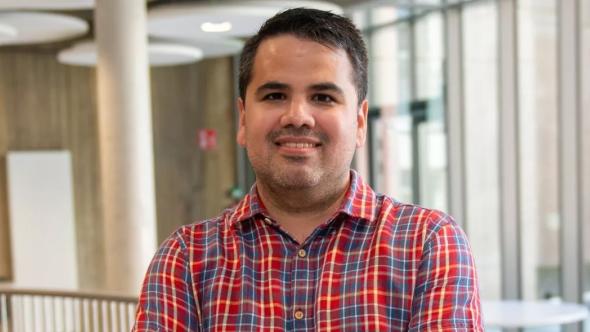
Thibault De Meyer

Thibaut De Meyer obtained his Master's degree in Anthropology at ULB, while nurturing a passion for philosophy. He therefore decided to also pursue a Master's degree in Philosophy, constantly seeking to establish balances and complementarities between these two fields. His approach has always been oriented towards concrete situations, where concepts are applied, in order to stay as close as possible to the realities studied by ethnologists and anthropologists. He has systematically explored the conceptual dimension in human actions and behaviors.

As part of his anthropology dissertation (People, Genes and Geneticists), he focused on the ethnography of a laboratory, examining how humans interact with blood bags and turn them into genetic maps of patients. In philosophy (in a dissertation entitled The Ecology of Monads), his interest focused on the concept of perspective in Leibniz, a modern thinker who explored the relationship between immaterial perspectives (which he called "monads") and material entities (bodies). Subsequently, Thibault De Meyer turned his attention to the question of consciousness in animals, notably by studying their ability to recognize themselves and attribute cognitive states to their fellow creatures.

Recently, Thibaut De Meyer has published a book entitled Qui a vu le zèbre? L'invention de la perspective animale (publisher: Les Liens qui Libèrent), in which he tackles the question of perspective through the case of zebra stripes, which are perceived differently by humans, lions, hyenas, flies... By taking into account this multiplicity of perspectives, biologists have come to question certain hypotheses seeking to explain the function of zebra stripes. Through a philosophical analysis of these scientific studies, Thibault De Meyer defends a form of relational perspectivism, which he distinguishes and compares to linear perspectivism, among others. This book stems from his doctoral thesis (Le bestiaire de Brunelleschi. Perspectivism and its reinvention in ethology) completed under the supervision of Vinciane Despret and defended in September 2022 at the University of Liège.

Since his academic appointment last September at UNamur, Thibaut De Meyer teaches philosophy of science and technology, as well as logic and argumentation. In the General Introduction to Philosophy course, together with his colleague Nicolas Monseu, he tries to make the subject attractive to students through pedagogical innovations, creating mini-shows, bringing in Lego blocks, etc.

As for his future projects, he plans to look into the history of the mirror test, the challenges it poses and the problems it solves, particularly as a non-verbal psychological test. As he points out, "The mirror is full of riddles."
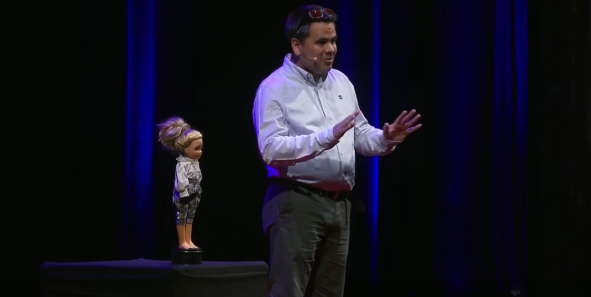

Video TEDxTours | Acromatopsia: see colors differently | Thibault De Meyer

Thibault Meyer lors du TEDxTours

Laura Rizzerio (Philosopher): "Why we urgently need to propose better resource management"

What the experts have to say
Philosophy
Science, philosophy and society

Laura Rizzerio is Professor of Philosophy at UNamur. Part of her research focuses on the notion of the common good. This theme was at the heart of the reflections on the occasion of the annual Chair of the Notre-Dame de la Paix University Centre, continuing an approach already begun the previous year during a research seminar. Laura Rizzerio takes a closer look at this concept and reviews the exchanges that took place.

Retour sur la thématique du bien commun avec la philosophe Laura Rizzerio

« Communs et bien(s) commun(s) » : pourquoi ce thème ? Pour dresser un constat et répondre à une urgence. 

Le constat

Il est évident que nos sociétés occidentales sont confrontées aujourd’hui à de multiples crises : économique, sociale, religieuse, écologique, politique, sanitaire. Ces crises font souffrir de populations entières et menacent d’extinction de nombreuses espèces, si non la planète elle-même. Mais elles ont au moins le mérite d’avoir permis le progressif effondrement du paradigme anthropologique datant de l’époque moderne. Celui-ci est fondé sur l’individu conçu comme self made man invulnérable et autonome, pour qui l’épanouissement personnel et la réalisation de soi, associés à la satisfaction de ses besoins individuels, constituent la finalité ultime de son existence.  

Ce paradigme a rendu possible le développement d’une organisation économique, sociale et politique structurée autour de la production, l’exploitation des ressources et le principe de la propriété privée, y compris pour les ressources que nous pourrions définir comme des « biens communs » (telles l’eau ou les matières premières – le gaz, le charbon, le pétrole, les minéraux, les forêts - ainsi que les inventions technologiques ou le patrimoine culturel développé au fil du temps). Cette organisation économique a favorisé la construction d’un État souverain dont la légitimité a longtemps reposé sur un « contrat » établi avec les citoyens qui garantit sécurité et protection à leurs intérêts particuliers en échange de l’aliénation d’une partie de leurs biens et de certaines libertés. Mais depuis l’avènement de la société industrielle, puisque le marché a progressivement remplacé l’État comme autorité légitime capable d’assurer la paix sociale, on se retrouve aujourd’hui faceà une organisation sociétale ultra-libérale qui favorise la réduction de toute réalité à un objet d’échange, y compris les ressources communes et l’homme lui-même. 

 C’est ce paradigme anthropologique et économique que les crises actuelles font chanceler.

On redécouvre progressivement que l’individu conçu comme self made man invulnérable et autonome n’existe pas, et que tous les vivants sont liés entre eux et à leur environnement, étant tous affectés par une commune vulnérabilité. Cela a fait resurgir un certain intérêt pour le(s) bien(s) commun(s).

Laura Rizzerio Professeure de Philosophie

L’urgence

Il devient aujourd’hui urgent d’imaginer et de mettre en œuvre un nouveau modèle de société capable de proposer une meilleure gestion des ressources et d’apporter ainsi de réponses plus adéquates aux crises auxquelles on est confronté. C’est ici que la référence au « bien commun » et aux « biens communs », qui a refait surface ces dernières décennies dans les recherches et dans les pratiques, devient intéressante. En 2009, le Prix Nobel d’économie a été attribué à Elinor Ostrom pour ses recherches à propos de la « théorie des communs »1. Il s’agit d’une théorie qui identifie les « communs » aux ressources matérielles et immatérielles d’une communauté dont la gestion résulte de la négociation de règles entre des individus.  Ces derniersse conçoivent en relation les uns avec les autres et ont à cœur le collectif, communiquent non pas en vue de l’intérêt particulier, mais en vue de la bonne gestion de ces mêmes biens, en garantissant aussi leur durabilité.  

Cette théorie permet d’envisager un nouveau modèle de gouvernance qui place les décisions de la communauté au centre des jeux économiques en suggérant d’autres modalités d’accès aux biens communs et à la propriété (qui ne disparaît pas pour autant) que celles imposées par le marché. Ce modèle renoue aussi avec la notion de bien commun telle qu’elle a été proposée dans l’Antiquité et au Moyen Âge (par exemple chez Aristote et Thomas d’Aquin),  et qui était associée à une vision anthropologique où l’Homme est pensé comme un être « politique » qui trouve sa raison d’être dans sa capacité à s’ouvrir à autre que lui, à travers le langage et la communication par exemple. 

L’ articulation entre « théorie des communs » et « bien commun » étant encore peu étudiée, la Chaire Notre-Dame de la Paix de l’UNamur a voulu mettre le focus sur le rapport qui existe entre Communs et  bien(s) commun(s), en invitant à prendre la parole de spécialistes en différentsdomaines (économie, philosophie, théologie, sciences humaines, droit, sciences et technologies, aménagement du territoire). La Chaire a ainsi accueilli de nombreux professeurs et professeures, spécialistes de renommée internationale, tels l’économiste et théologien Gaël Giraud, l’économiste Benjamin Coriat, les juristes Fabienne Orsi, Serge Gutwirth, Séverine Dussoiler et Alain Strowel ; les philosophes Arnaud Macé et Cécile Renouard ; l’historien René Robaye, et l’ingénieur architecte urbaniste Bernard Declève. Leurs interventions ont permis de mieux comprendre ce que la prise en compte du bien commun peut produire, pratiquement aussi, au niveau de la conception du bien, du juste, de la propriété et de la gestion des ressources dans le respect de la liberté de chacun.  

Le public, nombreux, composé d’académiques, de chercheurs, d’étudiantes et d’étudiants, de personnalités émanant de la société, a apprécié la profondeur des interventions et les réflexions que les différents intervenants ont proposées, permettant également un temps d’échange après chaque conférence. La Chaire Notre-Dame de la Paix et le centre de recherche éponyme (cUNdp) inscrivent ainsi leurs réflexions dans une démarche de service à la société en vue de contribuer à la construction d’un modèle « durable » d’organisation sociétale, respectueuse des personnes et de l’environnement.  

Le cUNdp en collaboration avec d’autres chercheuses et chercheurs de l’UNamur et d’autres universités belges et étrangères projette la constitution d’un think tank pour poursuivre la réflexion et conduire à de propositions concrètes, en bénéficiant aussi de l’apport et de l’expérience des acteurs de la société qui ont déjà donné vie à des expériences de Communs. 

Le centre Universitaire Notre-Dame de la paix

All news

Agenda

All events

Find out more about the Philosophy Department

SVG

Research

See content
SVG

Library

See content
SVG

Service to society

See content
SVG

Contact

See content
Image
Lettres études

Teaching philosophy at UNamur

Students benefit from training rooted in the history of philosophy and focused on contemporary issues: ecology, digital technology, common goods, cinema, and non-European thought. Develop critical thinking, ethical reflection, and argumentation skills through personalized support and innovative courses.

Direction

Sébastien LAOUREUX

Directeur du département de philosophie

Manon VILAIN

Secrétaire des départements