The Namur School of Economics (NSE) brings together talent in the discipline of economics to advance knowledge through research, teaching and outreach to society at large. It stimulates inter-university and interdisciplinary collaborations, as well as those forged with economic players in business, administration, and international public and non-governmental organizations.

Presentation

The Namur School of Economics (NSE) has a dozen full-time academics, around 20 PhD students, researchers and post-docs, and one administrative staff member.

It is responsible for organizing teaching in Bachelor's, Master's and PhD economics. Specifically, it co-organizes with the UNamur School of Management (UNSM) the Bachelier en Sciences Economiques et de Gestion and, with UCLouvain, the Master en Sciences Economiques, as well as the Specialized Master in International Economics and Development Economiques.

Members are engaged in research within the DEFIPP Research Institute and around three main themes: development economics, regional economics and economic policy, and macroeconomics and financial economics.

Find out more about the Namur School of Economics (NSE)

SVG

Economic research

See content
SVG

Members

See content
Image
Economie

Studies in economics

The Namur School of Economics (NSE) offers a dynamic program focused on rigor and the development of practical skills. The bachelor's and master's programs incorporate active and innovative teaching methods based on real-life cases. An internationally renowned program with a wide range of options, some of which are unique in Belgium.

Spotlight

News

30 Years of Part-Time Education: When Adults Become Students, Too

Law
Economy
Management
Marketing
Computer science (IT)
Students

For more than 30 years, UNamur has offered flexible-schedule programs, allowing people already in the workforce to enroll in bachelor’s, master’s, and specialized master’s degree programs. These programs are based on a tailored teaching approach centered on the students’ experiences and real-world situations. 

Etudiante en reprise d'études travaillant sur son ordinateur portable

For as long as he can remember, Théophile Renier, 31, has always wanted to be a lawyer. It’s a calling that this freelance music industry professional—who is also a marine technician—set aside for a time... before returning to it a few years ago by enrolling in the School of Law. Since 2016, UNamur has indeed offered a bachelor’s and master’s program in law with a flexible schedule.  “What I find exceptional about this program is that the professors actively support students in their success,” says Théophile. “Everything is set up so that people who can’t be there in person can still access the courses remotely. ” All classes in the flexible-schedule law program are recorded and posted online to facilitate remote learning. Students are also notified of assignment and exam deadlines well in advance, to accommodate their professional and family commitments. 

As Mathieu Rolain, the program’s academic coordinator, points out, students in the flexible-schedule law program stand out for their exceptional determination and discipline: “superheroes,” he says. So, despite working three days a week at the Port of Zeebrugge and running his own music business—“I work about 50 hours a week”—Théophile manages to juggle it all. “For me, it’s actually very complementary,” says this passionate student. “People often wonder if it’s harder to study when you already have professional experience, but for me, studying is a pleasure! Nowadays, I focus more on what’s essential.” After completing his first two years of his bachelor’s degree, the student is now starting his third year; he then plans to pursue a master’s degree before joining the bar. “For me, it’s a childhood dream coming true,” he says. The future lawyer has just one piece of advice for those who are still hesitating: 

Many people wonder if it’s possible, or if they’re too old: in my opinion, you should put your reservations aside! This program is truly designed for people who are currently working: it has everything you need to succeed. 

Théophile Renier Law student

Soft Skills and Skills Assessment

For the past 30 years, the EMCP Faculty (Economics, Management, Communication, Sciences Po) has also offered flexible-schedule programs. It was in this context that the FSE+ track “Assessment, Strengthening, and Enhancement of Skills,” led by Jean-Yves Gnabo, was developed. Thanks to external support from the European Social Fund Plus, this educational program now provides better support for adults returning to school, not only at EMCP but also, eventually, in other faculties at UNamur. The project’s uniqueness lies in its integration of two complementary dimensions. On the one hand, an academic framework centered on an innovative thesis format, designed to prevent students from dropping out near the end of the program due to “writer’s block.” On the other hand, there is support for transferable skills: communication, organization, leadership, teamwork, time management, stress management, and more.

“Historically, we’ve focused on subject-specific skills, while soft skills were assumed to be acquired,” explains Jean-Yves Gnabo. “But succeeding in a part-time program also depends on ‘soft’ skills.” Furthermore, there was another blind spot in our approach: the fact that students were not always aware of their own skills. ” The FSE+ program therefore allows students, with the help of a coach, to conduct a skills assessment upon entry and upon completion, thereby measuring their progress. “This is not only essential for self-confidence but also for learning how to leverage newly acquired skills in the professional world,” explains the economics professor. For the past two years, the EMCP Faculty has also offered a specialized master’s program with a flexible schedule focused on management and sustainable economics. Thirty-five students were already enrolled in the first year. “Once the master’s program is established, the idea is to draw on a board of external stakeholders facing transition challenges, as well as to build a community among students, alumni, and faculty,” concludes Jean-Yves Gnabo. 

IT Work Shifts: Training That's More Necessary Than Ever

For the past 25 years, it has also been possible to earn a master’s degree in computer science at UNamur through a part-time program. While the sector faces many questions related to the widespread adoption of AI, Vincent Englebert, a professor of computer science, has no doubt that this program will continue to attract many working professionals. “We’re obviously going through a turbulent phase, but one thing is certain: while AI boosts the number of lines of code we can write per day, it also introduces a fair amount of errors into those lines, which creates serious maintenance issues... Companies are therefore beginning to realize the ‘technical debt’ generated by AI: if we ignore an engine problem just because a car is still running, we run the risk of the vehicle exploding one day on the highway... ” For Vincent Englebert, training new professionals in the challenges of generative AI is therefore a necessity. “I’d even say that AI is a great opportunity to pursue a degree in computer science today! Thirty years ago, computer scientists were asked to develop very basic programs. Today, they’re asked to develop much more complex systems, and AI—when used properly—frees them from highly technical tasks in this context. This allows them to focus on what really matters: what humans want to achieve with AI to make it more ethical, fairer, more useful, and safer.” 
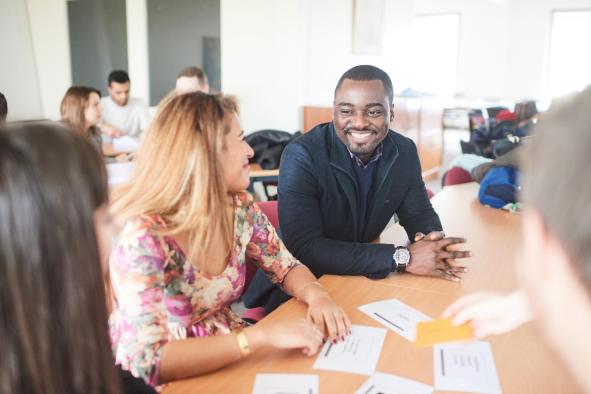
Master 60 en sciences économiques à horaire décalé

A teaching approach tailored to students' needs

At UNamur, adult education plays a key role. Some of these working adults return to university to advance their careers, while others do so because they are in the process of changing careers. They all arrive with their own experiences, expectations, and dreams, but also with family and professional responsibilities, time constraints, and doubts… That is why, through its various flexible-schedule programs (evening and Saturday classes), UNamur has developed a specific pedagogical approach to best support these adults in their new academic and professional ambitions: realistic time management, an emphasis on collaborative work, close interaction with faculty, and a co-constructive approach to learning...

This article is taken from the "Guest" section of Omalius magazine, Issue #42 (September 2026).

Omalius-Septembre-2026

Catherine Guirkinger will present her research at KU Leuven as part of a Francqui Chair

Gender and diversity
Economy

Catherine Guirkinger, a professor of economics at UNamur, has been invited by KU Leuven to hold a Francqui Chair. This distinction will give her the opportunity to present her research on gender relations and decision-making within households, as well as to strengthen ties between the two universities. 

Catherine Guirkinger

Established in 1933, the Francqui Chairs aim to promote exchanges between universities and highlight academic excellence. Each year, Belgian universities invite professors from other institutions to deliver a series of approximately ten hours of lectures, preceded by an inaugural lecture open to a wider audience. 

This year, KU Leuven has chosen to invite Catherine Guirkinger, a professor of economics at the University of Namur. “What interests me is how arrangements within couples and families are reshaped when the world around them changes, and how these changes affect each of their members.” “Her research, conducted primarily in sub-Saharan Africa but also in Europe, combines field surveys, experiments, and historical data.” 

An introductory lecture and three advanced courses

The Francqui Chair will begin with an inaugural lecture titled “Economic Change and the Family: Adjustment and Resistance,” followed by three more technical courses designed for master’s and doctoral students. Catherine Guirkinger will demonstrate how economic changes, laws, or social norms can influence decisions made within households. “We cannot ignore what happens within the family: all policy is, in a way, filtered through it,” she emphasizes. 

She will draw in particular on her research on divorce, domestic violence, decision-making within couples, and the influence of the economic environment on families. These courses will also provide an opportunity to engage with students already involved in research. “You can go deeper with an audience like this,” Catherine Guirkinger notes. “It’s always very stimulating.”  

Another opportunity to bring UNamur and KU Leuven closer together

This Francqui Chair also builds on an existing relationship between UNamur and KU Leuven. Economists from both universities have collaborated, in particular, on an EOS (Excellence of Science) project, the joint research program of the FNRS and the FWO. Catherine Guirkinger has very fond memories of that experience: “This program led to very fruitful scientific exchanges. This chair is a wonderful opportunity to build on them.” 

Her presence in Leuven will thus provide a new opportunity to exchange ideas, share research conducted in Namur, and further the collaboration between the two institutions. Congratulations to Catherine Guirkinger on this prestigious honor! 

Economy: Why Are More African Women Converting to New Christian Churches?

Economy

New Christian churches are experiencing spectacular growth, particularly in Africa. While they are attracting a growing number of followers, it is notable that women are joining them far more often than men. Catherine Guirkinger, a professor and researcher in development economics, examines this gendered phenomenon of religious conversion and the economic mechanisms underlying it. This original research has just received prestigious WelCHANGE funding through the 2025 call for proposals from the F.R.S-FNRS. 

Photo de Catherine Guirkinger

A phenomenon that has received little attention in the scientific literature has caught the attention of Catherine Guirkinger, an economist and professor at Sciences Po’s Faculty of Economics, Management, and Communication (EMCP), and her colleagues, Pablo Alvarez-Aragon, a postdoctoral researcher at the University of Bologna, and Jean-Philippe Platteau, professor emeritus at UNamur: the conversion of African women to “new Christian churches.” This term encompasses new Christian-inspired religious movements such as evangelical or Pentecostal churches, which are growing rapidly on the African continent and in other regions of the world. 

“Statistical analyses show that women are much more likely to be members of these new churches than men. This imbalance is unique to these new churches and is not observed in Catholic churches or other traditional religions,” explains Catherine Guirkinger. 

Economic Growth and Religious Conversion

To explain this trend of female conversion, Catherine Guirkinger puts forward a hypothesis centered on the support services offered by these churches, which encourage women in their economic empowerment. “In a previous research study conducted in Benin, we observed that when women gain access to new sources of income, they are more likely to convert,” explains Catherine Guirkinger. “When interviewed, they frequently mention these support services, which help them overcome the obstacles they face in accessing new economic opportunities. These services are not solely financial in nature but also include ‘spiritual protection,’ in a context where ‘successful’ women are often accused of or fall victim to witchcraft.” 

Thus, initial analyses suggest that religious conversion is correlated with the economic cycle: it is more frequent when incomes rise. “This is a rather unexpected finding,” the researcher notes. “Religious conversion is generally interpreted as a response to difficulties, particularly financial ones. Yet it would seem that economic growth, on the contrary, encourages membership in these new churches.” 

Economic tools for understanding individual behavior

One of the gray areas Catherine Guirkinger hopes to shed light on is identifying the roles these churches play in the empowerment of these women in the face of rather conservative and patriarchal gender norms. To understand this, Catherine Guirkinger will employ a combination of methods: statistical data, qualitative surveys, econometric analyses, as well as “economic games”—role-playing exercises designed to understand individual behaviors through simulated scenarios.  

Image
Catherine Guirkinger

The analysis of individual decisions always takes place within an economic conceptual framework, in which individuals make trade-offs based on the constraints they face and the negotiation processes at work. In this project, particular attention is paid to negotiation within the couple, where the husband plays a central role in upholding gender norms. Economic concepts thus shed light on religious decisions by situating them within economic and social dynamics.

Catherine Guirkinger Professor and researcher in development economics

The project will run for four years, from 2026 to 2030. The project team includes a doctoral student (currently being recruited), Jean-Philippe Platteau, professor emeritus at the Defipp Institute, and Pablo Alvarez of the University of Bologna (Italy). 

Quick Bio

Catherine Guirkinger specializes in development economics. At the Center for Economic Development Research (CRED) of the DeFIPP Institute (Development Finance & Public Policies), she conducts research on changes in family structures during development processes. Her work also focuses on the respective roles of women and men in society and on the role of public institutions in the broader sense. Catherine Guirkinger explores these issues particularly in the colonial context, drawing on archival data and historical surveys. In 2017, she received European ERC funding for this research program, and in 2024, she secured funding from the F.R.S-FNRS for a collaborative project with Bruno Schoumaker, professor of demography at UCLouvain, aimed at digitizing census data. As a professor, Catherine Guirkinger teaches courses in microeconomics and development economics. 

Discover the Defipp Institute

DeFIPP brings together the research conducted at the CRED, CEREFIM, and CERPE research centers, which focus on the following major research areas: development economics (CRED), finance and macroeconomics (CEREFIM), and regional economics and economic policy (CERPE). DeFIPP’s primary objective is to promote excellence in economic and financial research with strong international visibility, while applying economic methodology in both theoretical and empirical research. 

Benoit Decerf: An expert committed to poverty analysis at UNamur

Portrait
Sustainable
Wellness
SDG#1 - No poverty

Measuring poverty and well-being, to better understand development inequalities between countries and better assess development policies. This is the theme on which Benoit Decerf, assistant professor in the Department of Economics and researcher at UNamur's Development Economics Research Center, is working. He has been involved in improving the poverty indicators used by the World Bank.

Benoit Decerf

Benoit Decerf, holder of a PhD in cotutelle between UCLouvain and the University of Bielefeld (Germany), joined the University of Namur in 2016. His career path led him to significant experience as a researcher, notably from 2020 to 2025, when he was seconded to the World Bank's research center in Washington DC. In this context, he contributed to the development of tools designed to measure poverty and well-being. The aim? To better understand development inequalities between countries and better assess development policies.

Image
Benoit Decerf

Historically, development has been measured in a purely monetary way, first by average income, then by trying to take account of income inequalities, whether via inequality indicators or via poverty indicators focusing on the least well-off. Subsequently, several philosophers have stressed the importance of health, education and other dimensions of well-being that are difficult to measure with monetary units.

.
Benoit Decerf Researcher at the Centre de recherche en économie du développement (CRED)

"Indeed, it seems difficult to quantify a person's state of health in euros. To address the limitations of monetary indicators, alternatives such as the Human Development Index or multidimensional poverty measures have been proposed to include aspects such as life expectancy and access to education," he continues. At the Development Economics Research Center, Benoit Decerf's work is part of these efforts to improve development indicators.

His stint at the World Bank allowed him to take part in improving the indicators used by this institution. "In addition to measuring extreme poverty, defined by the threshold of $2.15 per day per person, which the United Nations would like to see fall below 3% of the world's population by 2030, the World Bank also measures "shared prosperity". This concept is intended to be more inclusive than poverty, by taking into account the incomes of everyone, not just the poor, but maintaining the importance of inequalities by weighting the incomes of the least well-off more heavily", explains the economics researcher. With his co-authors, Benoit Decerf has therefore proposed a new indicator, the Prosperity Gap, which aims to be both simple to explain and mindful of inequalities.

This example illustrates the pragmatic approach followed in his research. Rather than looking for the ideal indicator, Benoit Decerf seeks to build on existing indicators, identifying their main limitations, and seeking to improve them while taking into account the constraints faced by practitioners.

Secondary school enrolment: understanding parents' choices

Benoit Decerf is also working on the secondary school enrolment system. He is analyzing the mechanisms used to allocate places, based on algorithms, questioning their ability to respect parents' priorities, as well as the incentives and behaviors they generate for parents when they have to transmit their preferences between schools. It therefore investigates the manipulability of these algorithms, in order to understand their implications for the parental choice process.

Teaching: A game theory platform

Beyond research, Benoit Decerf teaches game theory as part of undergraduate training at UNamur. Through project-based teaching, he launched the Game Theory Platform, an internet platform enabling students to experiment with game theory concepts by playing against each other. This project was financed by a PUNCH fund in 2018, in collaboration with CS Lab asbl, an association of the Faculty of Computer Science dedicated to technological innovation and IT support.

Training

Discover our courses in economics, management, communication and political science.

30 Years of Part-Time Education: When Adults Become Students, Too

Law
Economy
Management
Marketing
Computer science (IT)
Students

For more than 30 years, UNamur has offered flexible-schedule programs, allowing people already in the workforce to enroll in bachelor’s, master’s, and specialized master’s degree programs. These programs are based on a tailored teaching approach centered on the students’ experiences and real-world situations. 

Etudiante en reprise d'études travaillant sur son ordinateur portable

For as long as he can remember, Théophile Renier, 31, has always wanted to be a lawyer. It’s a calling that this freelance music industry professional—who is also a marine technician—set aside for a time... before returning to it a few years ago by enrolling in the School of Law. Since 2016, UNamur has indeed offered a bachelor’s and master’s program in law with a flexible schedule.  “What I find exceptional about this program is that the professors actively support students in their success,” says Théophile. “Everything is set up so that people who can’t be there in person can still access the courses remotely. ” All classes in the flexible-schedule law program are recorded and posted online to facilitate remote learning. Students are also notified of assignment and exam deadlines well in advance, to accommodate their professional and family commitments. 

As Mathieu Rolain, the program’s academic coordinator, points out, students in the flexible-schedule law program stand out for their exceptional determination and discipline: “superheroes,” he says. So, despite working three days a week at the Port of Zeebrugge and running his own music business—“I work about 50 hours a week”—Théophile manages to juggle it all. “For me, it’s actually very complementary,” says this passionate student. “People often wonder if it’s harder to study when you already have professional experience, but for me, studying is a pleasure! Nowadays, I focus more on what’s essential.” After completing his first two years of his bachelor’s degree, the student is now starting his third year; he then plans to pursue a master’s degree before joining the bar. “For me, it’s a childhood dream coming true,” he says. The future lawyer has just one piece of advice for those who are still hesitating: 

Many people wonder if it’s possible, or if they’re too old: in my opinion, you should put your reservations aside! This program is truly designed for people who are currently working: it has everything you need to succeed. 

Théophile Renier Law student

Soft Skills and Skills Assessment

For the past 30 years, the EMCP Faculty (Economics, Management, Communication, Sciences Po) has also offered flexible-schedule programs. It was in this context that the FSE+ track “Assessment, Strengthening, and Enhancement of Skills,” led by Jean-Yves Gnabo, was developed. Thanks to external support from the European Social Fund Plus, this educational program now provides better support for adults returning to school, not only at EMCP but also, eventually, in other faculties at UNamur. The project’s uniqueness lies in its integration of two complementary dimensions. On the one hand, an academic framework centered on an innovative thesis format, designed to prevent students from dropping out near the end of the program due to “writer’s block.” On the other hand, there is support for transferable skills: communication, organization, leadership, teamwork, time management, stress management, and more.

“Historically, we’ve focused on subject-specific skills, while soft skills were assumed to be acquired,” explains Jean-Yves Gnabo. “But succeeding in a part-time program also depends on ‘soft’ skills.” Furthermore, there was another blind spot in our approach: the fact that students were not always aware of their own skills. ” The FSE+ program therefore allows students, with the help of a coach, to conduct a skills assessment upon entry and upon completion, thereby measuring their progress. “This is not only essential for self-confidence but also for learning how to leverage newly acquired skills in the professional world,” explains the economics professor. For the past two years, the EMCP Faculty has also offered a specialized master’s program with a flexible schedule focused on management and sustainable economics. Thirty-five students were already enrolled in the first year. “Once the master’s program is established, the idea is to draw on a board of external stakeholders facing transition challenges, as well as to build a community among students, alumni, and faculty,” concludes Jean-Yves Gnabo. 

IT Work Shifts: Training That's More Necessary Than Ever

For the past 25 years, it has also been possible to earn a master’s degree in computer science at UNamur through a part-time program. While the sector faces many questions related to the widespread adoption of AI, Vincent Englebert, a professor of computer science, has no doubt that this program will continue to attract many working professionals. “We’re obviously going through a turbulent phase, but one thing is certain: while AI boosts the number of lines of code we can write per day, it also introduces a fair amount of errors into those lines, which creates serious maintenance issues... Companies are therefore beginning to realize the ‘technical debt’ generated by AI: if we ignore an engine problem just because a car is still running, we run the risk of the vehicle exploding one day on the highway... ” For Vincent Englebert, training new professionals in the challenges of generative AI is therefore a necessity. “I’d even say that AI is a great opportunity to pursue a degree in computer science today! Thirty years ago, computer scientists were asked to develop very basic programs. Today, they’re asked to develop much more complex systems, and AI—when used properly—frees them from highly technical tasks in this context. This allows them to focus on what really matters: what humans want to achieve with AI to make it more ethical, fairer, more useful, and safer.” 

Master 60 en sciences économiques à horaire décalé

A teaching approach tailored to students' needs

At UNamur, adult education plays a key role. Some of these working adults return to university to advance their careers, while others do so because they are in the process of changing careers. They all arrive with their own experiences, expectations, and dreams, but also with family and professional responsibilities, time constraints, and doubts… That is why, through its various flexible-schedule programs (evening and Saturday classes), UNamur has developed a specific pedagogical approach to best support these adults in their new academic and professional ambitions: realistic time management, an emphasis on collaborative work, close interaction with faculty, and a co-constructive approach to learning...

This article is taken from the "Guest" section of Omalius magazine, Issue #42 (September 2026).

Omalius-Septembre-2026

Catherine Guirkinger will present her research at KU Leuven as part of a Francqui Chair

Gender and diversity
Economy

Catherine Guirkinger, a professor of economics at UNamur, has been invited by KU Leuven to hold a Francqui Chair. This distinction will give her the opportunity to present her research on gender relations and decision-making within households, as well as to strengthen ties between the two universities. 

Catherine Guirkinger

Established in 1933, the Francqui Chairs aim to promote exchanges between universities and highlight academic excellence. Each year, Belgian universities invite professors from other institutions to deliver a series of approximately ten hours of lectures, preceded by an inaugural lecture open to a wider audience. 

This year, KU Leuven has chosen to invite Catherine Guirkinger, a professor of economics at the University of Namur. “What interests me is how arrangements within couples and families are reshaped when the world around them changes, and how these changes affect each of their members.” “Her research, conducted primarily in sub-Saharan Africa but also in Europe, combines field surveys, experiments, and historical data.” 

An introductory lecture and three advanced courses

The Francqui Chair will begin with an inaugural lecture titled “Economic Change and the Family: Adjustment and Resistance,” followed by three more technical courses designed for master’s and doctoral students. Catherine Guirkinger will demonstrate how economic changes, laws, or social norms can influence decisions made within households. “We cannot ignore what happens within the family: all policy is, in a way, filtered through it,” she emphasizes. 

She will draw in particular on her research on divorce, domestic violence, decision-making within couples, and the influence of the economic environment on families. These courses will also provide an opportunity to engage with students already involved in research. “You can go deeper with an audience like this,” Catherine Guirkinger notes. “It’s always very stimulating.”  

Another opportunity to bring UNamur and KU Leuven closer together

This Francqui Chair also builds on an existing relationship between UNamur and KU Leuven. Economists from both universities have collaborated, in particular, on an EOS (Excellence of Science) project, the joint research program of the FNRS and the FWO. Catherine Guirkinger has very fond memories of that experience: “This program led to very fruitful scientific exchanges. This chair is a wonderful opportunity to build on them.” 

Her presence in Leuven will thus provide a new opportunity to exchange ideas, share research conducted in Namur, and further the collaboration between the two institutions. Congratulations to Catherine Guirkinger on this prestigious honor! 

Economy: Why Are More African Women Converting to New Christian Churches?

Economy

New Christian churches are experiencing spectacular growth, particularly in Africa. While they are attracting a growing number of followers, it is notable that women are joining them far more often than men. Catherine Guirkinger, a professor and researcher in development economics, examines this gendered phenomenon of religious conversion and the economic mechanisms underlying it. This original research has just received prestigious WelCHANGE funding through the 2025 call for proposals from the F.R.S-FNRS. 

Photo de Catherine Guirkinger

A phenomenon that has received little attention in the scientific literature has caught the attention of Catherine Guirkinger, an economist and professor at Sciences Po’s Faculty of Economics, Management, and Communication (EMCP), and her colleagues, Pablo Alvarez-Aragon, a postdoctoral researcher at the University of Bologna, and Jean-Philippe Platteau, professor emeritus at UNamur: the conversion of African women to “new Christian churches.” This term encompasses new Christian-inspired religious movements such as evangelical or Pentecostal churches, which are growing rapidly on the African continent and in other regions of the world. 

“Statistical analyses show that women are much more likely to be members of these new churches than men. This imbalance is unique to these new churches and is not observed in Catholic churches or other traditional religions,” explains Catherine Guirkinger. 

Economic Growth and Religious Conversion

To explain this trend of female conversion, Catherine Guirkinger puts forward a hypothesis centered on the support services offered by these churches, which encourage women in their economic empowerment. “In a previous research study conducted in Benin, we observed that when women gain access to new sources of income, they are more likely to convert,” explains Catherine Guirkinger. “When interviewed, they frequently mention these support services, which help them overcome the obstacles they face in accessing new economic opportunities. These services are not solely financial in nature but also include ‘spiritual protection,’ in a context where ‘successful’ women are often accused of or fall victim to witchcraft.” 

Thus, initial analyses suggest that religious conversion is correlated with the economic cycle: it is more frequent when incomes rise. “This is a rather unexpected finding,” the researcher notes. “Religious conversion is generally interpreted as a response to difficulties, particularly financial ones. Yet it would seem that economic growth, on the contrary, encourages membership in these new churches.” 

Economic tools for understanding individual behavior

One of the gray areas Catherine Guirkinger hopes to shed light on is identifying the roles these churches play in the empowerment of these women in the face of rather conservative and patriarchal gender norms. To understand this, Catherine Guirkinger will employ a combination of methods: statistical data, qualitative surveys, econometric analyses, as well as “economic games”—role-playing exercises designed to understand individual behaviors through simulated scenarios.  

Image
Catherine Guirkinger

The analysis of individual decisions always takes place within an economic conceptual framework, in which individuals make trade-offs based on the constraints they face and the negotiation processes at work. In this project, particular attention is paid to negotiation within the couple, where the husband plays a central role in upholding gender norms. Economic concepts thus shed light on religious decisions by situating them within economic and social dynamics.

Catherine Guirkinger Professor and researcher in development economics

The project will run for four years, from 2026 to 2030. The project team includes a doctoral student (currently being recruited), Jean-Philippe Platteau, professor emeritus at the Defipp Institute, and Pablo Alvarez of the University of Bologna (Italy). 

Quick Bio

Catherine Guirkinger specializes in development economics. At the Center for Economic Development Research (CRED) of the DeFIPP Institute (Development Finance & Public Policies), she conducts research on changes in family structures during development processes. Her work also focuses on the respective roles of women and men in society and on the role of public institutions in the broader sense. Catherine Guirkinger explores these issues particularly in the colonial context, drawing on archival data and historical surveys. In 2017, she received European ERC funding for this research program, and in 2024, she secured funding from the F.R.S-FNRS for a collaborative project with Bruno Schoumaker, professor of demography at UCLouvain, aimed at digitizing census data. As a professor, Catherine Guirkinger teaches courses in microeconomics and development economics. 

Discover the Defipp Institute

DeFIPP brings together the research conducted at the CRED, CEREFIM, and CERPE research centers, which focus on the following major research areas: development economics (CRED), finance and macroeconomics (CEREFIM), and regional economics and economic policy (CERPE). DeFIPP’s primary objective is to promote excellence in economic and financial research with strong international visibility, while applying economic methodology in both theoretical and empirical research. 

Benoit Decerf: An expert committed to poverty analysis at UNamur

Portrait
Sustainable
Wellness
SDG#1 - No poverty

Measuring poverty and well-being, to better understand development inequalities between countries and better assess development policies. This is the theme on which Benoit Decerf, assistant professor in the Department of Economics and researcher at UNamur's Development Economics Research Center, is working. He has been involved in improving the poverty indicators used by the World Bank.
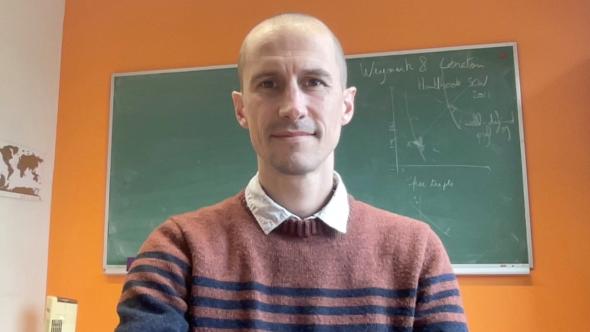
Benoit Decerf

Benoit Decerf, holder of a PhD in cotutelle between UCLouvain and the University of Bielefeld (Germany), joined the University of Namur in 2016. His career path led him to significant experience as a researcher, notably from 2020 to 2025, when he was seconded to the World Bank's research center in Washington DC. In this context, he contributed to the development of tools designed to measure poverty and well-being. The aim? To better understand development inequalities between countries and better assess development policies.

Image
Benoit Decerf

Historically, development has been measured in a purely monetary way, first by average income, then by trying to take account of income inequalities, whether via inequality indicators or via poverty indicators focusing on the least well-off. Subsequently, several philosophers have stressed the importance of health, education and other dimensions of well-being that are difficult to measure with monetary units.

.
Benoit Decerf Researcher at the Centre de recherche en économie du développement (CRED)

"Indeed, it seems difficult to quantify a person's state of health in euros. To address the limitations of monetary indicators, alternatives such as the Human Development Index or multidimensional poverty measures have been proposed to include aspects such as life expectancy and access to education," he continues. At the Development Economics Research Center, Benoit Decerf's work is part of these efforts to improve development indicators.

His stint at the World Bank allowed him to take part in improving the indicators used by this institution. "In addition to measuring extreme poverty, defined by the threshold of $2.15 per day per person, which the United Nations would like to see fall below 3% of the world's population by 2030, the World Bank also measures "shared prosperity". This concept is intended to be more inclusive than poverty, by taking into account the incomes of everyone, not just the poor, but maintaining the importance of inequalities by weighting the incomes of the least well-off more heavily", explains the economics researcher. With his co-authors, Benoit Decerf has therefore proposed a new indicator, the Prosperity Gap, which aims to be both simple to explain and mindful of inequalities.

This example illustrates the pragmatic approach followed in his research. Rather than looking for the ideal indicator, Benoit Decerf seeks to build on existing indicators, identifying their main limitations, and seeking to improve them while taking into account the constraints faced by practitioners.

Secondary school enrolment: understanding parents' choices

Benoit Decerf is also working on the secondary school enrolment system. He is analyzing the mechanisms used to allocate places, based on algorithms, questioning their ability to respect parents' priorities, as well as the incentives and behaviors they generate for parents when they have to transmit their preferences between schools. It therefore investigates the manipulability of these algorithms, in order to understand their implications for the parental choice process.

Teaching: A game theory platform

Beyond research, Benoit Decerf teaches game theory as part of undergraduate training at UNamur. Through project-based teaching, he launched the Game Theory Platform, an internet platform enabling students to experiment with game theory concepts by playing against each other. This project was financed by a PUNCH fund in 2018, in collaboration with CS Lab asbl, an association of the Faculty of Computer Science dedicated to technological innovation and IT support.

Training

Discover our courses in economics, management, communication and political science.

All news

Agenda

All events

Administration

Nathan J'Espère

Department secretariat