Process management is a key concept in business. By analyzing and monitoring how processes are carried out, a company can track its operational performance and identify opportunities for improvement. However, for many companies, this aspect of management is still too often underdeveloped.

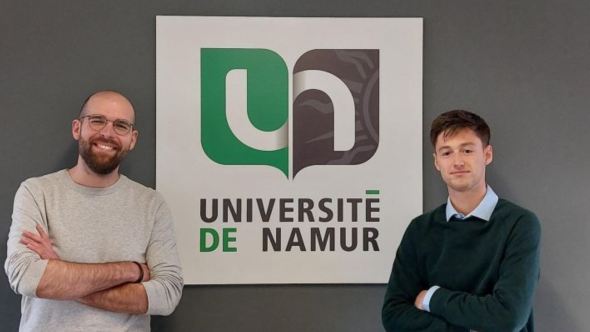
The unique aspect of the U-BPM research project led by Malik Schinckus and supervised by Professor Anthony Simonofski (UNamur School of Management and member of the MINDIT research center) is its specific focus on the people who execute processes on the ground—namely, the employees themselves. “Most organizations still oversee operations from a distance, collaborating with their employees only through Q&A sessions or interviews. To better understand the field and find effective solutions, it is essential to optimize collaboration between the ‘management’ and the ‘domain experts,’ that is, the people responsible for executing the processes, explains Malik Schinckus.

The goal of Malik Schinckus’s thesis is therefore to implement tools and methods that facilitate better communication between these groups and improve the flow of information, with the aim of sustainably optimizing process execution. To achieve this, generative artificial intelligence (AI) appears to be a promising avenue: “Generative AI is indeed accessible to everyone, as interactions are based on natural language, continues Malik Schinckus.

Aligning research with real-world needs

To implement a sustainable solution tailored to the realities of Belgian businesses, Malik Schinckus is collaborating with the consulting firm Daïmo, which specializes in IT and management. This immersive research provides a step back to assess the possibilities offered by AI by comparing it with real-world applications. “At present, it is impossible to automate everything and replace an analyst for complex cognitive tasks. The analyst identifies what is implicit, contextualizes the information, and judges when understanding is sufficient. AI does not yet have these capabilities, the researcher notes. 

The creation of innovative tools to solve complex problems encountered in the field is an approach known in academia as “Design Science Research.” 

Image
Anthony Simonofski

The collaboration with Daïmo fits perfectly into this paradigm by bridging the gap between research and the realities of the business world through the iterative development of a new solution that bridges theory and practice. This is extremely valuable not only for the company but also for the university.

Anthony Simonofski Professor and researcher in digital transformation

Effects are already visible

The benefits of this methodology are already evident: reduced costs, improved service quality, and greater flexibility.

Even though it’s not perfect, it’s clear that the tool is already delivering tangible benefits. Generative AI acts as a bridge between different levels, transforming ideas into actionable data for other roles. If this bridge helps spark reflection on day-to-day practices, then the tool provides real value by improving collaboration and understanding across departments.

Malik Schinckus Ph.D. student at the UNamur School of Management (EMCP Faculty)

Ultimately, the data from this research will help refine this solution and, eventually, enable its deployment on a larger scale.

Watch the video about the project

Win4doc

Win4Doc is a program established by Wallonia (SPW Research) that enables a Walloon company to hire a researcher to conduct doctoral research in collaboration with a university research unit.

Logo Wallonie