Every thought that forms in our consciousness is influenced both by external constraints—authority, dogmatism—and internal constraints—opinions, emotions, suggestions. Thinking critically is therefore always first and foremost an exercise in reflection, as Socrates already illustrated. "Through maieutics, the art of dialogue, Socrates sought to question his own opinions. He said: the only thing I know is that I know nothing," recalls Sabina Tortorella, a researcher in political philosophy at UNamur.  Since the Enlightenment, this art of questioning (etymologically, "criticize," which comes from Greek, means "to discern") has also been understood as the possibility of making public use of reason. "In Kant's conception, criticism has an emancipatory dimension," explains Sabina Tortorella.  "It consists of breaking free from a state of tutelage, which is often very convenient..." With Kant also emerged the idea that we should not only be wary of dogmatism or our emotions, but also of our own reasoning: it is reason itself that is the object of criticism. Of course, this critical disposition is not the sole responsibility of individuals: it requires institutions that allow and encourage debate, discussion, and confrontation. "Critical thinking is an attitude, an ethos that cannot develop in just any context," emphasizes Sabina Tortorella. "That is why strengthening critical thinking requires first strengthening democratic institutions." "

Proportionate trust

"Critical thinking could be defined as the ability to correctly proportion the trust we place in certain statements based on their intrinsic quality," comments Olivier Sartenaer, lecturer in philosophy of science at UNamur. 

Olivier Sartenaer
Olivier Sartenaer

"In other words, if you are critical, you must place a lot of trust in reliable discourse and little or no trust in unreliable discourse. For example, flatism, which considers the earth to be flat, can be considered an unreliable theory. Believing in it strongly therefore shows a lack of critical thinking. Paradoxically, conspiracy theorists vehemently claim to be critical thinkers, whereas, as Sabina Tortorella points out, "critical thinking is not radical skepticism." This ability to proportion one's trust appropriately cannot be equated with the notion of intelligence. "It also depends on psychosocial dispositions," emphasizes Olivier Sartenaer. "We know, for example, that climate skepticism is more prevalent among conservative people. In extreme cases such as flat-earthism, we often find psychosocial suffering, a form of marginalization. Adhering to flat-earthism is a way of finding a community, a sense of belonging. If we lived in a less violent, more benevolent society, there would probably be less adherence to these theories."

A privilege that comes with responsibility 

Because the ability to exercise critical thinking is also a form of privilege. "Discernment requires time and energy: it's a task that involves quite costly cognitive processes," continues Olivier Sartenaer. "Everyone is capable of critical thinking, but sitting down and having the time to think is an incredible luxury," points out Géraldine Mathieu, professor at the Faculty of Law at UNamur. A luxury that, according to her, requires a form of commitment. "Critical thinking also means criticizing the norm, the law, and case law, and fighting against them when they don't seem fair to us," emphasizes the youth law specialist. "My message to students is to make them understand that they can bring about change. This requires a certain amount of courage." 

In this sense, Géraldine Mathieu believes that universities today need to reinvent themselves. "We can no longer train students to be purely theoretical." With this in mind, she encourages her students to explore issues related to youth law through service learning, an alternative to coursework that is rewarded with credits. Today, 70% of her students choose this option.

Géraldine Mathieu
Geraldine Mathieu

"If I teach them the texts, I teach them nothing or almost nothing. Service learning, on the other hand, requires social engagement, critical thinking, and an understanding of oneself and society. "Whether working alongside unaccompanied minors supported by the Red Cross, in nurseries, youth centers, community centers, or pediatric wards in hospitals, students can develop their critical thinking skills based on diverse and complex real-world situations. "It also allows them to realize from the outset whether the profession is right for them. Because the reality is often very harsh," comments the teacher.

Epistemic deluge

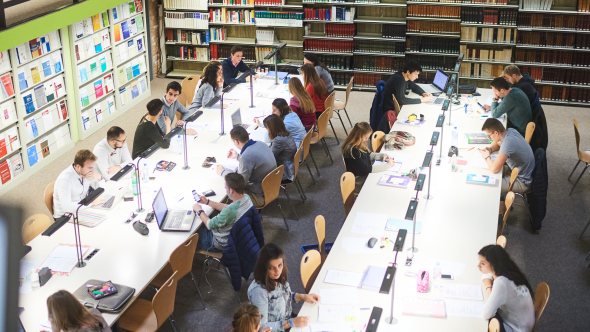
Critical thinking has always required learning, discipline, and commitment. But today, information overload is creating new challenges. "We sometimes talk about 'epistemic flooding'," explains Olivier Sartenaer. "There is simply too much information coming at us for us to be able to process it critically." Selecting your sources is therefore an essential first step. "Students must learn not to rush headlong into resources," explains Élodie Mercy, librarian in the training group at the BUMP (Moretus Plantin University Library). "That's why we teach them to question sources, identify the right methodologies, and sort through information." " Marie-France Juchert, director of the BUMP, believes that leaving university without these skills would be a real "failure." "Today, professions are evolving," she points out. "You have to be able to learn throughout your life. Knowing how to research is therefore essential.

This is especially true given that the emergence of artificial intelligence has further complicated the relationship with sources. Katrien Beuls, professor of artificial intelligence at UNamur, believes that ChatGPT poses unprecedented threats to critical thinking. Far from the reassuring statements of some of her colleagues, she points out that the majority of students—and citizens—are unaware of how LLM (Large Language Models) work, which are in no way search engines, but statistical systems applied to linguistics. "ChatGPT simply guesses the words that follow," she reminds us. "There is no knowledge base behind it. 

But students think it's the new Google!" For Katrien Beuls, it is therefore urgent to strengthen "basic knowledge," without which it is impossible to exercise critical thinking when faced with AI. "Students tell me they use ChatGPT simply to brainstorm... but that's precisely the point: forming your own thoughts and being creative is the hardest thing to do!" 

KB
Katrien Beuls

Katrien Beuls warns in particular about the threat that LLMs pose to writing skills. "Today, all students use ChatGPT. This has made it impossible to set written assignments... But learning to write nurtures critical thinking. It's something that's very difficult—everyone knows that!—and needs to be practiced almost every day. At school, we don't use calculators before mastering the basics of arithmetic or spell checkers before mastering the language... It should be the same for writing."

However, as Olivier Sartenaer points out, it is unfounded to think that young people, because they are fed on social media, have abandoned their critical abilities. This is what the latest "critical thinking barometer" has shown once again.[1] "Young people's education now includes media literacy, which tends to make them more critical: when it comes to 'fake news', it is often older people who fall for it...," notes the philosopher. Furthermore, for Olivier Sartenaer, young people's increased sensitivity to issues of discrimination is precisely proof of the excellent health of their critical thinking skills. "Not accepting unfair things in the name of authority is indeed a manifestation of critical thinking... even if it is sometimes confusing and uncomfortable for teachers," he concludes. 


[1] https://www.universcience.fr/fr/esprit-critique/barometre-esprit-critique-2025

For example, 71% of 15-24 year olds believe that scientists follow strict ethical rules (compared to 62% of those aged 18 and over), 69% believe that they are best placed in their field to know what is good for citizens (compared to 57%), 62% believe that science is the only reliable source of knowledge (compared to 53%), and 66% believe that scientists are independent (compared to 53%). However, they are more fearful of the power wielded by scientists, which can make them dangerous (73% compared to 65%). 

The theory of motivated reasoning

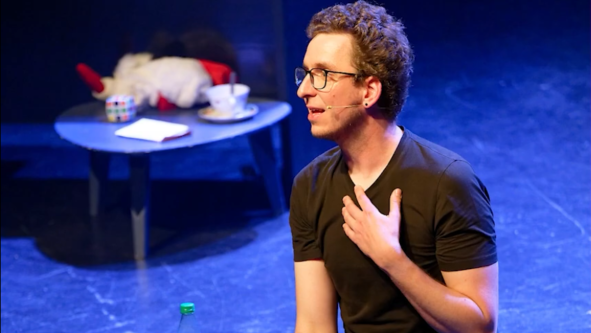
In his lecture-performance "L'instant critique" (The Critical Moment), a one-man show developed as part of his doctoral thesis, Régis Falque, a researcher at the EMCP (Economics, Management, Communication, Political Science) faculty of the University of Namur, sets out to "bring moments of critical thinking and social experiences to life in an experiential way with the audience." Accessible from the fourth year of secondary school onwards, this educational tool explores how "critical thinking involves both skills such as the ability to recognize an argument, evaluate reasoning, and conduct research, but also dispositions such as open-mindedness and empathy," summarizes Régis Falque. This combination forms what is known as "intellectual virtue." It is a virtue that no one can claim to possess once and for all... When faced with "ideologically charged" topics (vaccination, pseudoscience, etc.), our opinions can influence the activation of our critical skills. This is known as the theory of motivated reasoning. "When confronted with a subject on which they have an ideological stance, even a Nobel Prize winner may not activate their critical thinking skills or, even more dramatically, may activate their skills for the sole purpose of justifying their point of view on the subject," Régis Falque points out. This serves as a reminder that there is no such thing as a "critical thinking professional" and that intellectual virtue never comes without a degree of modesty. 

Régis Falque

Critical thinking and immersive teaching

To stimulate her students' critical thinking, Mélanie Latiers, a lecturer at the Faculty of Economics, Social Sciences, and Management at UNamur, uses immersive teaching methods. "In the first few weeks of the course, we take the students away from the university for two days to work on the creative process and the development of their project. " After disability and precariousness, this year students are invited to work on sustainable development. The goal? To start from sensitive rather than theoretical knowledge in order to develop projects that are more connected to the issues at hand. "In the first year, virtual reality allowed students to immerse themselves in the daily life of a worker with a disability (autism, visual impairment, etc.) ," explains Mélanie Latiers. "When we worked on poverty, we used an art installation called 'A Mile in My Shoes,' which used their own shoes to tell the stories of people in need. " This approach aims to "zoom out from preconceptions" in order to then return to a "more scientific" stance. "Thanks to this approach, students feel more involved and less powerless in relation to these issues," summarizes the teacher. 

This article is taken from the "Issues" section of Omalius magazine #35 (July 2025).

Omalius #37