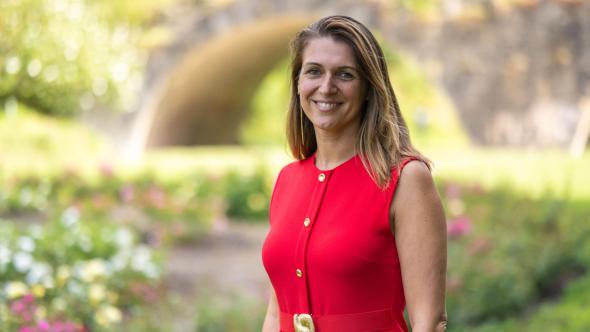
What is your role within the UNamur University Observatory for Rural Medicine (OUMRu)?

I am working on the issue of access to healthcare. Together with Dr. Dominique Henrion, we have collaborated on an initial collection of quantitative data via "The Social Study" program involving 5,000 Belgian citizens. This first step aims to objectively assess the difficulties encountered in the field and identify geographical variations. The initial results show that we are in a tense situation. In a second qualitative phase, we are examining how the profession and the care relationship have evolved in this context. The vision of the profession and professional practices have changed profoundly. I am particularly interested in characteristics such as precariousness, age, gender, and health status. These characteristics reveal differences within the patient population. If you are socially isolated, in a precarious situation, and suffering from serious or chronic conditions, this shortage has a significant impact. Take palliative care, for example: the situation is currently serious in some areas, and doctors are no longer systematically able to meet needs. 

What explains this shortage?

The profession of general practitioner has changed significantly in recent years. We are seeing that the new generation of doctors is more inclined to set up practice in cities, which offer different working conditions. Young doctors entering the job market do not have the same vision of the profession as doctors nearing the end of their careers. Issues of age and gender also have a strong impact on the evolution of the profession. These young doctors are no longer necessarily going to devote themselves body and soul to their work. They are seeking a different balance between their private and professional lives. Another aspect is tending to disappear: the availability of family doctors at all hours and home visits. Today, the system of shared on-call duties is the norm, and doctors are no longer on call at all times. We must therefore assume that the profession has changed. 

This project brings together expertise in medicine, geography, and sociology. What do you see as the added value of this multidisciplinary collaboration?

This collaboration is extremely fruitful, thanks to the diversity of our respective expertise and backgrounds. The sociological perspective allows us to understand the experiences, meaning, and practices of general medicine in rural areas. The aim is to understand the role of the family doctor in patient health and the changing vision of the profession. In geography, Catherine Linard is conducting quantitative research with a particular focus on the discipline's interest in territory. This work aims to create a "rurality index" to identify where general practitioners are located. The expertise of medicine is to work, from there, on the attractiveness of locations in particular. In general, the applied dimension of the project appeals to me greatly, and it is the observatory's role to analyze the situation with a view to taking action. There is an urgent need to understand this phenomenon, which is felt by the entire population and experienced particularly acutely by people in vulnerable situations. 

Are solutions already being considered?

Interdisciplinarity is very rich in this regard. In particular, through the links between the Observatory and the master's degree in general medicine, Dominique Henrion seeks to identify the priorities of future doctors in order to see how to act on the locations where they will practice to correct the current imbalances. The interdisciplinary supervision of a doctoral student, funded by the Christian Mutual Insurance Company as part of an FSR, will also enable us to make progress in this area (see box). 

You also conduct research in the sociology of work and gerontology, which is the study of aging. What is your approach to your work?

I am part of the critical gerontology movement, which questions the social structures that weigh on older people. For example, the increase in the retirement age reflects a tendency to have to and want to remain active, in order to maintain a certain standard of living, but also to continue to participate in society. I am working with Nathalie Burnay, professor at the EMCOP Faculty, on an FNRS project co-funded by the Swiss National Science Foundation, which compares how work is experienced and perceived by aging people after retirement age. This raises questions related to the end of life and how individuals rethink their identity in light of social norms that are quite ageist and value activity. This four-year collaboration is part of the projects I am conducting at the Transitions Institute, which explore the restructuring of social roles throughout life, particularly through the prism of inequalities and helping relationships, issues that are also addressed in the work carried out by the OUMRu.

Express resume

Amélie Pierre holds a PhD in political and social sciences. She is a lecturer at UNamur and a postdoctoral researcher at the Transitions Institute, in the Transitions and Life Stages Division. She is head of the CERIAS Research Center for the Master's in Engineering and Social Action at Henallux and HELHa. She is interested in normativities and changes in individuals' identities over the course of their lives, particularly among minority groups in relation to disability, age, or precariousness. 

An unprecedented collaboration

UNamur and Mutualité chrétienne have entered into an unprecedented partnership within the framework of OUMRu. This partnership involves the co-financing of an ambitious, multidisciplinary research project led by UNamur over a four-year period, under the direction of Amélie Pierre and Catherine Linard, with a view to deciphering the mechanisms contributing to the disparity in the provision of general medical care in Wallonia and objectively assessing shortages at the local level. 

logo-mutualité-chrétienne

Cet article est tiré de la rubrique "Le jour où" du magazine Omalius #38 (Septembre 2025).

cover-omalius-septembre-2025