The Global Research Alliance of Jesuit Universities (GRAJU) was founded in August 2025 by seven renowned Jesuit institutions: Ateneo de Manila University (Philippines), Fordham University and Georgetown University (United States), ITESO (Mexico), Sogang University (South Korea), the University of Deusto (Spain), and the University of Namur (Belgium). Twenty-five Jesuit universities are currently members.

GRAJU aims to be a global network dedicated to advancing research rooted in the Ignatian values of excellence, justice, and service to society. The alliance seeks to foster international and interdisciplinary collaborations to generate knowledge capable of addressing contemporary global challenges.

Its objectives include, in particular:

  • Supporting joint research projects,
  • Promoting academic exchanges among researchers at member universities,
  • Supporting the search for external funding and collaborative grant opportunities
  • The Jesuits’ shared commitment to education, service, ethics, and the common good through meaningful research. 

An inaugural symposium focused on artificial intelligence

GRAJU’s first annual symposium was held from March 9 to 11, 2026, at Ateneo de Manila University, with the theme “The AI Frontier and the Distinctives of Global Jesuit Higher Education.” 

This inaugural event brought together researchers, faculty members, and academic leaders from around the world to launch a collective discussion on the challenges of artificial intelligence and how Jesuit universities can help shape its use in ways that respect human dignity and pave the way for the future.

The program included plenary sessions, roundtables, and discussion sessions designed to identify avenues for collaboration and lay the groundwork for future research partnerships within the alliance.

Membres du réseau GRAJU

A delegation from UNamur involved in the GRAJU initiative

The University of Namur was represented at this inaugural event by Stéphane Leyens, Vice-Rector for International Relations and Cooperation, and Sabine Henry, Professor of Geography and Dean of the Faculty of Sciences. Their participation helped strengthen ties with partner institutions and position UNamur at the forefront of the collaborative initiatives led by GRAJU.

Stéphane Leyens et Sabine Henry à l'Ambassade belge des Philippines
From left to right: Anna Vibar (Ph.D. candidate, UP Diliman-UNamur, Geography), Sébastien Dujardin (Department of Geography), Sabine Henry, Stephane Leyens, Vladislava Iordanova (Belgian Ambassador to Manila), Maïté Le Polain (Project Officer, Embassy), Kerby Alvarez (UP Diliman, Professor of History)
Image
Photo de Stéphane Leyens

The event also provided an opportunity to explore concrete synergies, particularly through one-on-one meetings between researchers and field activities, which are set to become key components of future annual symposia hosted in rotation by member universities. 

Stéphane Leyens Vice President for International Relations and Cooperation

The next symposium will be held in June 2027 at the University of Deusto in Bilbao, with the theme "Democracy, Pluralism, and Citizenship." 

UNamur, a founding member of GRAJU

Invited in the spring of 2025 to join the founding members of GRAJU, UNamur viewed this membership as recognition of the efforts it has made in recent years to enhance its visibility and commitment within international networks of Jesuit universities. 

Through its participation in GRAJU, UNamur intends to actively contribute to the creation of an international space for collaborative research, in keeping with its academic mission and values, while offering its academic community new opportunities for global cooperation.

UNamur and the Philippines: A Long-Standing Partnership, New Opportunities

The mission to the Philippines provided an opportunity to strengthen long-standing partnerships and explore new avenues of collaboration.

For over thirty years, the University of Namur has maintained close academic cooperation with several Philippine institutions. Initiated in 1992 in the field of geography, this collaboration has gradually expanded to include numerous disciplines, including history, social and political philosophy, and environmental sciences.

These partnerships have led to numerous joint research projects focused on major challenges facing the Philippines, such as natural resource management and the defense of local communities’ rights. They have been supported by various sources of funding, both national and international. Furthermore, for nearly 10 years, an Erasmus+ ICM agreement has been in place between UNamur and the University of the Philippines, Diliman.

This dynamic of cooperation continues today, notably through the Philippine Studies Programmefrom which UNamur benefits, which highlights scientific collaborations and opens new avenues for academic, cultural, and societal partnerships. 

The delegation, which also included Sébastien Dujardin (Department of Geography), was received by the Population Institute and the Resilience Institute at the University of the Philippines, the Service Learning team at Ateneo de Manila University, the Office of Economic and Cultural Diplomacy at the Department of Foreign Affairs, the Office of International Relations at the Lyceum of the Philippines University, and the Belgian Ambassador in Manila. These various meetings provided an opportunity to explore new collaborations.

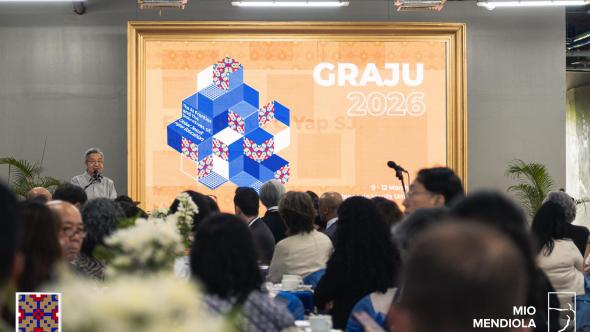
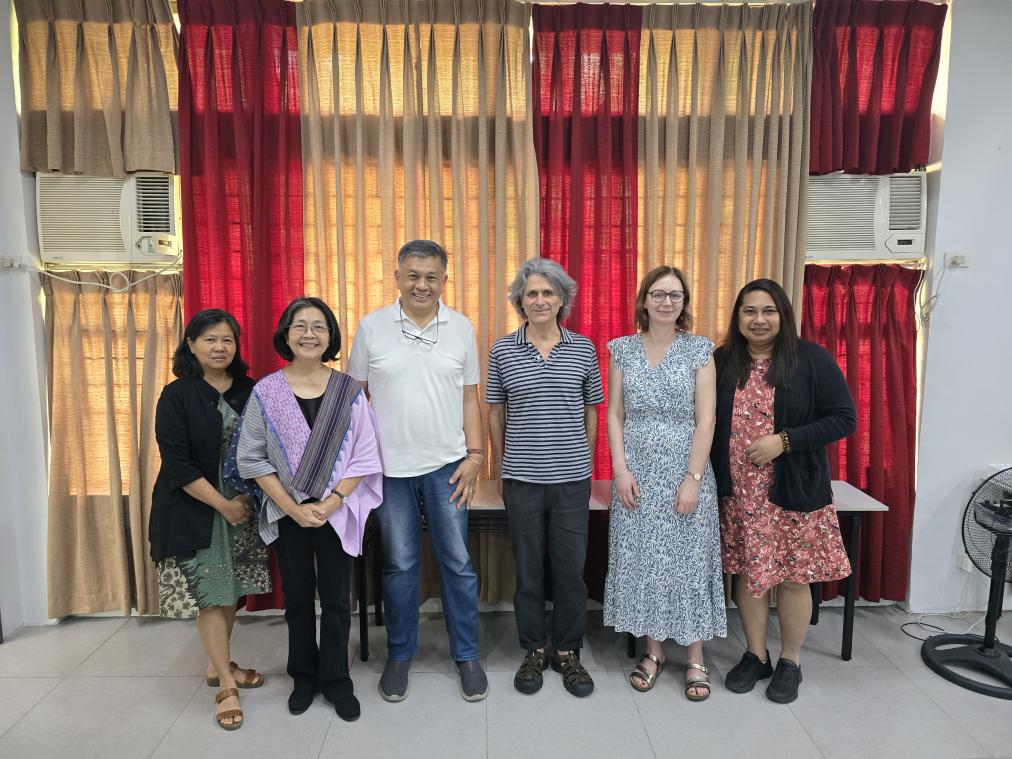
Photo at the UP Population Institute, from left to right: Christian Joy Cruz (Professor), Grace T. Cruz (Professor), Andres Ignacio (Associate Professor), Stephane Leyens, Sabine Henry, Maria Midea M. Kabamalan (Assistant Professor)