What prompted you to undertake your studies and then your doctorate in physics?

I was fascinated by the research field of one of my professors, Guy Demortier. He was working on the characterization of antique jewelry. He had found a way to differentiate by PIXE (Proton Induced X-ray Emission) analysis between antique and modern brazes that contained Cadmium, the presence of this element in antique jewelry being controversial at the time. He was interested in ancient soldering methods in general, and the granulation technique in particular. He studied them at the Laboratoire d'Analyses par Réaction Nucléaires (LARN). Brazing is an assembly operation involving the fusion of a filler metal (e.g. copper- or silver-based) without melting the base metal. This phenomenon allows a liquid metal to penetrate first by capillary action and then by diffusion at the interface of the metals to be joined, making the junction permanent after solidification. Among the jewels of antiquity, we find brazes made with incredible precision, the ancient techniques are fascinating.

Studying antique jewelry? Not what you'd expect in physics.

In fact, this was one of Namur's fields of research at the time: heritage sciences. Professor Demortier was conducting studies on a variety of jewels, but those made by the Etruscans using the so-called granulation technique, which first appeared in Eturia in the 8th century BC, are particularly incredible. It consists of depositing hundreds of tiny gold granules, up to two-tenths of a millimeter in diameter, on the surface to be decorated, and then soldering them onto the jewel without altering its fineness. So I also trained in brazing techniques and physical metallurgy.

The characterization of jewelry using LARN's particle accelerator, which enables non-destructive analysis, yields valuable information for heritage science.

This is, moreover, a current area of collaboration between the Department of Physics and the Department of History at UNamur (NDLR: notably through the ARC Phoenix project).

Statuette en Or (Egypte), env. 2000 ans av.J.C, analysée au LARN (1990)
Gold statuette (Egypt), circa 2000 BC, analyzed at LARN (1990)

How did that help you land a job at CERN?

I applied for a position as a physicist at CERN in the field of vacuum and thin films, but was invited for the position of head of the vacuum brazing department. This department is very important for CERN as it studies methods for assembling particularly delicate and precise parts for accelerators. It also manufactures prototypes and often one-off parts. Broadly speaking, vacuum brazing is the same technique as the one we study at Namur, except that it is carried out in a vacuum chamber. This means no oxidation, perfect wetting of the brazing alloys on the parts to be assembled, and very precise temperature control to obtain very precise assemblies (we're talking microns!). I'd never heard of vacuum brazing, but my experience of Etruscan brazing, metallurgy and my background in applied physics as taught at Namur were of particular interest to the selection committee. They hired me right away!

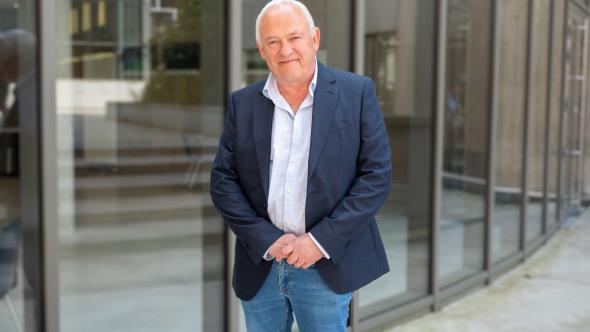
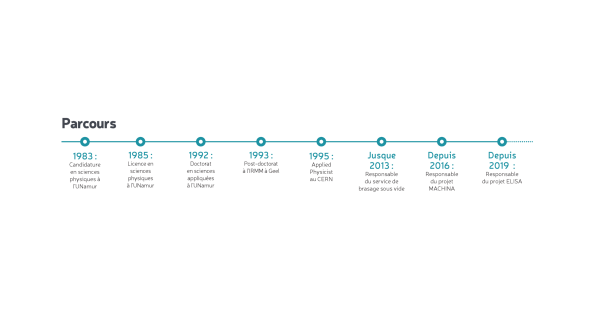
Le parcours de Serge Mathot

Tell us about CERN and the projects that keep you busy.

CERN is primarily known for hosting particle accelerators, including the famous LHC (Large Hadron Collider), a 27 km circumference accelerator buried some 100 m underground, which accelerates particles to 99.9999991% of the speed of light! CERN's research focuses on technology and innovation in many fields: nuclear physics, cosmic rays and cloud formation, antimatter research, the search for rare phenomena (such as the Higgs boson) and a contribution to neutrino research. It is also the birthplace of the World Wide Web (WWW). There are also projects in healthcare, medicine and partnerships with industry.

Nuclear physics at CERN is very different from what we do at UNamur with the ALTAÏS accelerator. But my training in applied physics (namuroise) has enabled me to integrate seamlessly into various research projects.

Plateforme technologique SIAM - Accélérateur ALTAïS IBMM
ALTAÏS accelerator (Synthesis, Irradiation and Analysis of Materials technology platform - SIAM)

For my part, in addition to developing vacuum brazing methods, a field in which I've worked for over 20 years, I've worked a lot in parallel for the CLOUD experiment. For over 10 years, and until recently, I was its Technical Coordinator. CLOUD is a small but fascinating experiment at CERN which studies cloud formation and uses a particle beam to reproduce atomic bombardment in the laboratory in the manner of galactic radiation in our atmosphere. Using an ultra-clean 26 m³ cloud chamber, precise gas injection systems, electric fields, UV light systems and multiple detectors, we reproduce and study the Earth's atmosphere to understand whether galactic rays can indeed influence climate. This experiment calls on various fields of applied physics, and my background at UNamur has helped me once again.

I was also responsible for CERN's MACHINA project -Movable Accelerator for Cultural Heritage In situ Non-destructive Analysis - carried out in collaboration with the Istituto Nazionale di Fisica Nucleare (INFN), Florence section - Italy. Together, we have created the first portable proton accelerator for in-situ, non-destructive analysis in heritage science. MACHINA is soon to be used at the OPD (Opificio delle Pietre Dure), one of the oldest and most prestigious art restoration centers, also in Florence. The accelerator is also destined to travel to other museums or restoration centers.

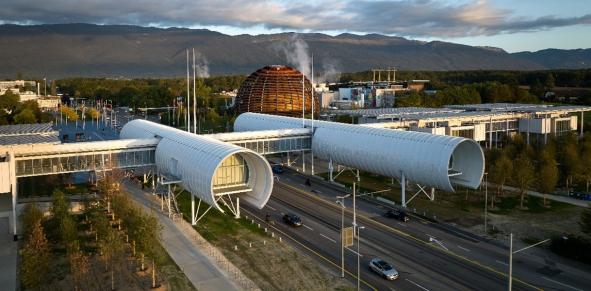
Currently, I'm in charge of the ELISA (Experimental LInac for Surface Analysis) project. With ELISA, we're running a real proton accelerator for the first time in a place open to the public: the Science Gateway (SGW), CERN's new permanent exhibition center

L'accélérateur ELISA du CERN
ELISA accelerator (CERN)

ELISA uses the same accelerator cavity as MACHINA. The public can observe a proton beam extracted just a few centimetres from their eyes. Demonstrations are organized to show various physical phenomena, such as light production in gases or beam deflection with dipoles or quadrupoles, for example. The PIXE analysis method is also presented. ELISA is also a high-performance accelerator that we use for research projects in the field of heritage and others such as thin films, which are used extensively at CERN. The special feature is that the scientists who come to work with us do so in front of the public!

Do you have a story to tell?

I remember that in 1989, I finished typing my report for my IRSIA fellowship in the middle of the night, the day before the deadline. It had to be in by midnight the next day. There were very few computers back then, so I typed my report at the last minute on one of the secretaries' Macs. One false move and pow! all my data was gone - big panic! The next day, the secretary helped me restore my file, we printed out the document and I dropped it straight into the mailbox in Brussels, where I arrived after 11pm, in extremis, because at midnight, someone had come to close the mailbox. Fortunately, technology has come a long way since then...

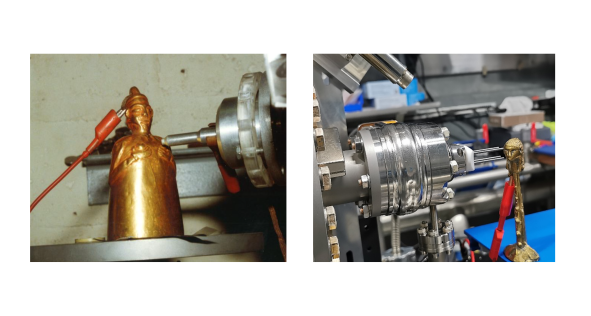
And I can't resist sharing two images 35 years apart!

To the left, a Gold statuette (Egypt), c. 2000 BC, analyzed at LARN - UNamur (photo 1990) and to the right, a copy (in Brass) of the Dame de Brassempouy, analyzed with ELISA - CERN (2025).

The "photographer" is the same, so we've come full circle...

A gauche, Statuette en Or (Egypte), env. 2000 ans av.J.C, analysée au LARN (photo 1990) – A droite, copie (en Laiton) de la Dame de Brassempouy, analysée avec ELISA (2025)

The proximity between teaching and research inspires and questions. This enables graduate students to move into multiple areas of working life.

Come and study in Namur!

Serge Mathot (May 2025) - Interview by Karin Derochette

Further information

CERN - the science portal

Le Portail de la Science du CERN

This article is taken from the "Alumni" section of Omalius magazine #38 (September 2025).

cover-omalius-septembre-2025