Astronaut Raphaël Liégeois will be carrying some rather unusual passengers in his luggage: dried blob samples, some of which have been irradiated with X-rays at UNamur. What are the Namur scientists hoping to achieve? They want to observe how this organism responds to the space environment and is able to repair its DNA in microgravity, and compare these results with those obtained in a similar experiment carried out on Earth. "In our laboratory, we simulate the stresses that the blob could undergo in space in order to assess its ability to survive and repair itself," explains Anne-Catherine Heuskin, professor in the Department of Physics.

Careful preparation and rigorous testing

While awaiting the rocket launch scheduled for 2027, researchers at UNamur are already actively preparing for the mission. For several months, they have been conducting a series of tests to ensure the reliability of the experiment: reaction to temperature variations, power failures, transport to the launch site in Florida, assembly of the mini-spacecraft that will house the samples, etc. "Every detail counts: even the choice of bags that protect the samples from light can influence the results," emphasizes Boris Hespeels.

Once on the ISS, Raphaël Liégeois will rehydrate the samples, culture them in a cabin on the station, and finally place them in a freezer at -80°C. "This procedure, which seems simple, becomes complex in zero gravity. We also have to ensure the stability of our samples, regardless of the timing of the experiment," continues Boris Hespeels. Inside the ISS, Raphaël Liégeois will have to carry out various experiments selected by the Belgian Science Policy Office (BELSPO). "And the order in which they will be carried out has not yet been determined," the two Namur-based researchers explain.  

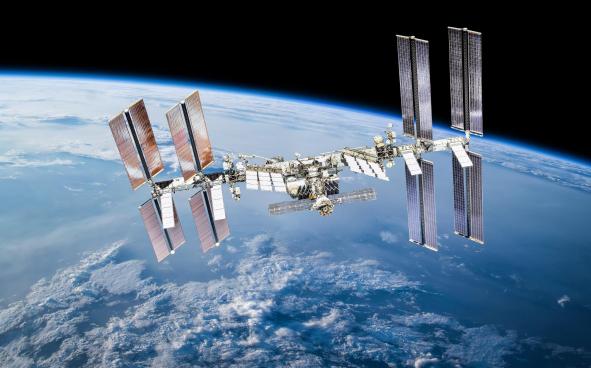
Station spatiale internationale (ISS)

Major scientific and societal impacts

Post-mission analyses will identify cellular protection mechanisms under extreme conditions. These results could inspire the development of protective molecules for astronauts or patients undergoing radiotherapy. "Space remains a hostile environment. Understanding how living organisms adapt to it is essential for preparing future exploration," Boris Hespeels points out.

Finally, the BeBlob project also has an educational component: activities based on the blob will be offered in schools to raise awareness among young people about scientific research and space exploration. An ambitious project is also under consideration to enable students aged 8 to 18 to work directly on samples that took part in Raphaël Liégeois' mission aboard the ISS.

What is a blob?

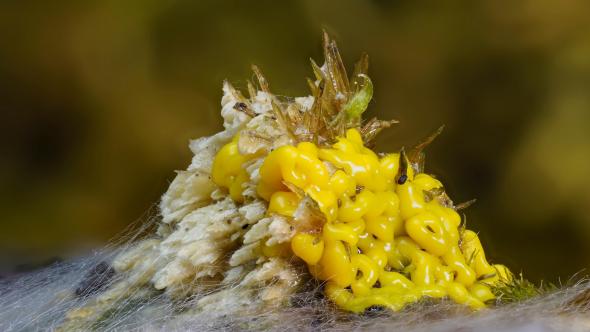
The blob (Physarum polycephalum) is an extraordinary single-celled organism. It is neither animal, plant, nor fungus. Although it has no brain, it is capable of learning, memorizing, and solving complex problems. It can dry out completely and survive in extreme conditions, making it an ideal model for studying the resilience of living organisms. As part of the BeBlob project, researchers at UNamur have demonstrated this organism's exceptional resistance to ionizing radiation, up to a thousand times the lethal dose for humans!

Physarum polycephalum

UNamur's expertise

The University of Namur is establishing itself as a key player in the study of the blob. Researchers at the LARN (Laboratory for Nuclear Reaction Analysis) and the ILEE (Institute of Life, Earth and Environment) and NARILIS (Namur Research Institute for Life Sciences) institutes have been conducting research into radiation resistance and DNA repair for several years. The BeBlob project builds on experience gained during previous space missions and active collaboration with ESA and BELSPO. The BeBlob project is one of three Belgian scientific experiments selected from 29 projects to be carried out during Belgian astronaut Raphaël Liégeois' mission scheduled for 2027. This scientific expertise places UNamur at the heart of space biology and fundamental research on life in extreme environments. The project is part of UNIVERSEH, the ERASMUS+ alliance of European universities that aims to build a "European university" focused on the space sector, of which UNamur is a member. 

This article is taken from the "Eureka" section of Omalius magazine #39 (December 2025).


Cover Omalius décembre 2025