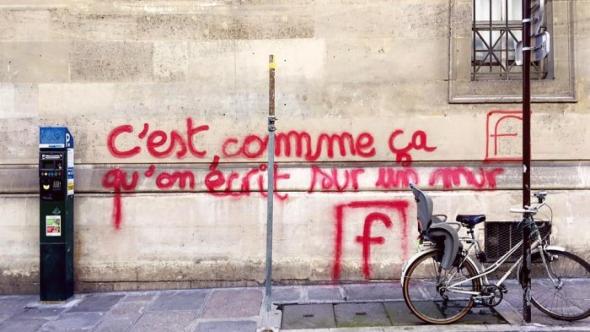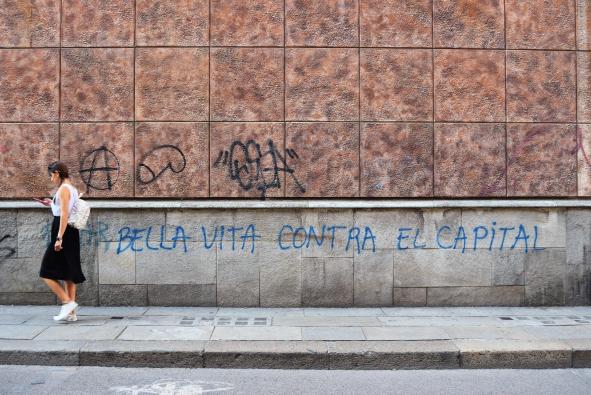
Tags, banners, collages, flyers, and posters... all these media fall under what is known as "wild literature." We owe this expression to Belgian academic Jacques Dubois, who, in his book L'Institution de la littérature (The Institution of Literature), used it to refer to works produced outside the traditional publishing circuits. Nearly fifty years later, the Observatoire des Littératures Sauvages (OLSa) has made these literary practices—often raw, artisanal, and ephemeral—its field of exploration. 

The OLSa was created thanks to a FNRS Scientific Impulse Mandate awarded to Denis Saint-Amand at the end of 2020. It brings together a dense, open, and international network of researchers interested in cultural and literary productions that can be described as "wild." "One of the interests of this center is to participate in the decompartmentalization of literary studies by bringing them into dialogue with specialists in disciplines such as history, sociology, anthropology, and political science," emphasizes Denis Saint-Amand.

image d'un tag en italien

From protest writings to the cries of supporters

Since its inception, OLSa has tackled various projects and organized several conferences and study days. These include the inaugural symposium in June 2022 devoted to the writings of protest. More recently, the center's members have taken an interest in the poetics of the football stadium: the discourse (banners, chants, and shouts of supporters), their poetics, and their modes of production, dissemination, and circulation, mirroring the social and political issues to which they relate.

Over the course of these meetings, Namur has become a unique and recognized hub in this field of research. This is something that Denis Saint-Amand is particularly pleased about. "The OLSa is a rather unique space. It brings together people from a variety of backgrounds to discuss these issues, launch doctoral or postdoctoral research, and also involve students—by inviting them to work on written cultures outside the canonical literary corpus and giving them the opportunity (through seminars and conferences) to encounter other voices other disciplines."

Recognition that came at just the right time

OLSa was officially recognized as a research center in June 2025, three years after its founding. "I thought it would be useful to see if it worked, if the center could attract people," explains the researcher. "That's why we organized various conferences and study days, produced publications, etc. This recognition brings stability and visibility to the center. It's paradoxical for a space dedicated to practices that are not very institutional, but it's also and above all a great sign of confidence from the university," says Denis Saint-Amand.

During the 2025-2026 academic year, OLSa will organize an international seminar on poetic practices outside of books, made possible in part by a research grant from the FNRS. Among other things, it will focus on Instagram accounts dedicated to street poetry, lyrical graffiti in barracks and prison cells, and poetic performance in public spaces. More details on the OLSa website! 

Learn more about the Observatoire des Littératures Sauvages (OLSa).