Strategically located at the intersection of the Andes mountain range, the Amazon rainforest, and the Galápagos Islands (made famous by a certain Charles Darwin), Ecuador is a hotspot of biodiversity. More than 150 years after the naturalist's observations, this country remains a popular field of study for scientists investigating how wild organisms adapt to changes in their environment.

Ecuador as an open-air laboratory

As part of a two-year project funded by the ARES International Cooperation Commission (ARES-CCI), Professors Frédéric Silvestre and Alice Dennis from the Environmental and Evolutionary Biology Research Unit (URBE) at UNamur have formed a partnership with the Universidad Central Del Ecuador. The goal? To apply the genetic and epigenetic techniques developed in the Namur laboratories to fish and macroinvertebrates in Ecuadorian streams. 

Image
Photo de Frédéric Silvestre

"Genetic and epigenetic marks on genes provide valuable information about the environmental stresses experienced by wild populations."

Frédéric Silvestre Professor in the Department of Biology

An initial sampling campaign was conducted this summer, and another is planned for next spring, with Frédéric Silvestre and Alice Dennis participating. This collaboration also enabled URBE to welcome an Ecuadorian researcher who came to train in nanopore sequencing techniques, used in this project, and to carry out tests on samples of the species studied. Nanopore sequencing is a method of sequencing long DNA strands using an electrical signal. "This technique is very advantageous because it facilitates genome assembly and allows us to work on both the DNA sequence and its modifications. Nanopore sequencing also uses very small, portable equipment that is easy to use in the field," the researcher continues. The aim of using this technology is to demonstrate the feasibility of this process and, ultimately, to contribute to the development of more effective biodiversity conservation policies based on concrete genetic data.

Peru: Understanding the dynamics of a country undergoing rapid change

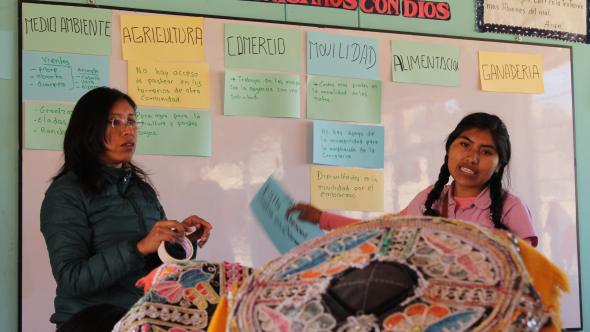
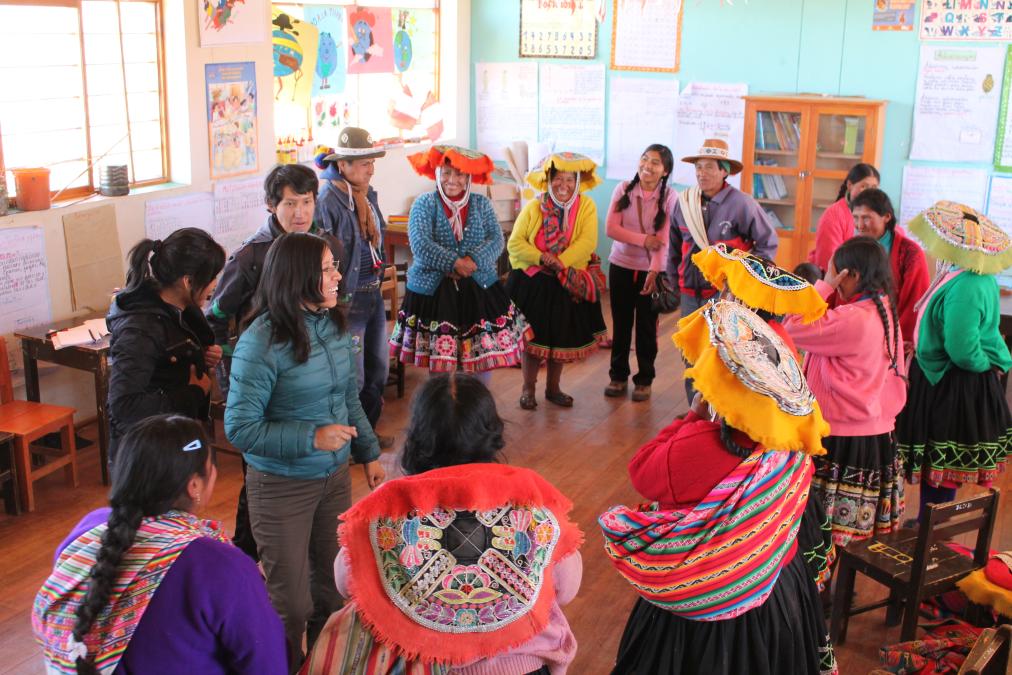
Newly appointed Vice-Rector for International and External Relations at UNamur, Stéphane Leyens is involved in no fewer than four projects in Peru, working closely with the Universidad Nacional San Antonio Abad del Cusco (UNSAAC). Located in the Andes mountain range at an altitude of nearly 3,500 meters, this university has been receiving support from the ARES International Cooperation Commission (ARES-CCI) since 2009 to improve the quality of its teaching and strengthen its research capabilities. These projects are set against the backdrop of the new "university law," which has profoundly changed the landscape of higher education by emphasizing teacher training and the social responsibility of universities, which are now encouraged to integrate issues such as interculturality, the environment, and gender into a local rural development perspective. 

It must be said that the country's cultural, political, and socioeconomic context is undergoing profound change. As a result, rural communities are torn between their attachment to traditional lifestyles and the appeal of the economic opportunities offered by the modernization of agriculture or the growth of tourism. 

It is this tension that Stéphane Leyens is studying in the district of Ocongate (department of Cuzco), located on the route of the Southern Interoceanic Highway. "This paved road, connecting Lima to Sao Paulo and completed in 2006, has completely transformed the community and socio-economic dynamics of the Quechua populations of the high Andes, providing access to the mines of the Amazon, urban markets, higher education institutions, and opening up the region to tourism. The idea was therefore to study this change in dynamics through the prism of family and community decision-making, with a particular focus on education, agricultural activities, and gender issues," explains Stéphane Leyens. These questions—which particularly resonate with the realities experienced by the population—led to two doctoral research projects conducted by Peruvian researchers. 

In the same vein, and in a brand new project, the researcher is looking at the impact of the development of informal mining operations on the local economy from an original angle: Quechua epistemology. This project is based on a partnership with a team from the Universidad Nacional José María Arguedas (UNAJMA), which specializes in this approach.

Image
Photo de Stéphane Leyens

"The rise of informal mining has destabilized family dynamics, with mining activities becoming increasingly male-dominated and agricultural work increasingly female-dominated within communitiesTo analyze these changes, we start from the framework of thought of the Quechua-speaking farming communities: their mythologies, their conceptions of their relationship to the land and nature, to the community, etc."

Stéphane Leyens Vice-Rector for International and External Relations at UNamur

Feedback from a student

"As part of the Master's degree in physics, we are required to do an internship in Belgium or elsewhere. I chose to fly to Brazil because local researchers are conducting research related to my thesis topic. It was also an opportunity to step out of my comfort zone and experience life in a distant country.

It went very well, both academically and personally. I had the opportunity to help write an article and follow the entire publication process. The work was very loosely organized, and I was able to conduct my research independently. I quickly formed lasting friendships, particularly by participating in forró classes, a Brazilian dance.

If I had one piece of advice to give, it would be: go for it! Going far away can be scary, but it teaches you a lot, especially the fact that you are capable of bouncing back in sometimes unpredictable situations."

- Thaïs Nivaille, physics student

This article is taken from the "Far away" section of Omalius magazine #38 (September 2025).

cover-omalius-septembre-2025